Introduction
India’s highway program has reshaped how contractors plan their work. Long corridors, tight schedules, and rising use of concrete pavement mean that the contractors who win and deliver these projects are the ones who plan their materials and accessories well in advance.
Bharatmala Pariyojana is the center of that program. As the focus moves into its later phases, a growing share of the work involves rigid pavement, and rigid pavement runs on a specific set of PQC accessories and materials. A contractor who treats those accessories as an afterthought will struggle to keep a fast-moving NHAI job on schedule.
This guide looks at Bharatmala Phase 2 as it stands in 2026 and sets out, in practical terms, the PQC accessories and materials a contractor should have planned for on an NHAI concrete pavement project.
What Is Bharatmala Pariyojana?
Bharatmala Pariyojana is the Government of India’s flagship highway development program, delivered largely through the National Highways Authority of India. It was launched to improve the efficiency of road corridors across the country by developing economic corridors, feeder routes, expressways, and other key highway links.
The first phase of the program planned a very large length of national highway development, in the order of tens of thousands of kilometers, and a substantial part of that has been awarded and built. The program has been a major driver of modern highway construction practice in India, including the wider use of concrete pavement on heavily trafficked corridors.
Bharatmala Phase 2 in 2026
By 2026, attention within the program will have moved towards its next phase of corridors. Planning for Phase 2 has been underway, with additional highway lengths and corridors identified for development beyond the original Phase 1 scope. Major expressway projects associated with the later phase of the program have been progressing, including large multi-lane corridors designed for high-speed, high-volume traffic.
Because program scope, corridor lists, and project status change over time, a contractor or supplier should always confirm the current details directly from official NHAI and Ministry of Road Transport and Highways sources rather than relying on a fixed figure. What matters for planning purposes is the direction of travel: more highway length, more high-traffic corridors, and a continued strong role for concrete pavement.
For a PQC contractor or accessory supplier, the practical takeaway is simple. The pipeline of rigid pavement work remains significant, and being ready with the right materials and accessories is a competitive advantage.
Why PQC Matters for NHAI Projects
Concrete pavement, built as pavement-quality concrete, is well-suited to the kind of corridors a national highway program produces. Rigid pavement carries heavy commercial traffic well, performs reliably in hot conditions, resists rutting, and offers a long service life with relatively low maintenance.
On corridors that are expected to carry heavy and growing traffic for decades, those qualities are valuable. That is why PQC features strongly on many NHAI projects. And because PQC is a precise, sequenced form of construction, every project depends on a defined set of accessories and materials being available at the right time. Miss one, and a fast-tracked highway pour can stall.
PQC Materials Required for NHAI Projects
The core materials for a PQC highway are the concrete constituents and the steel, all to the approved specification.
• Cement: of the approved grade, properly stored, and used in date order.
• Coarse and fine: aggregates that are hard, clean, and correctly graded.
• Clean water: fit for concreting.
• Admixtures: such as plasticizers and retarders to control workability and setting.
• Dowel and tie bar steel: plasticizers, round bars for dowels, deformed bars for tie bars.
• Curing materials: including curing compound and hessian or other approved coverings.
Where the design calls for improved crack resistance in particular applications, fiber may be specified. Both PPE fibre and glass fibre are used in concrete for this purpose, and where they are specified, they must be dosed strictly according to the mix design. All materials need testing and approval before they reach the pour.
PQC Accessories Required for NHAI Projects
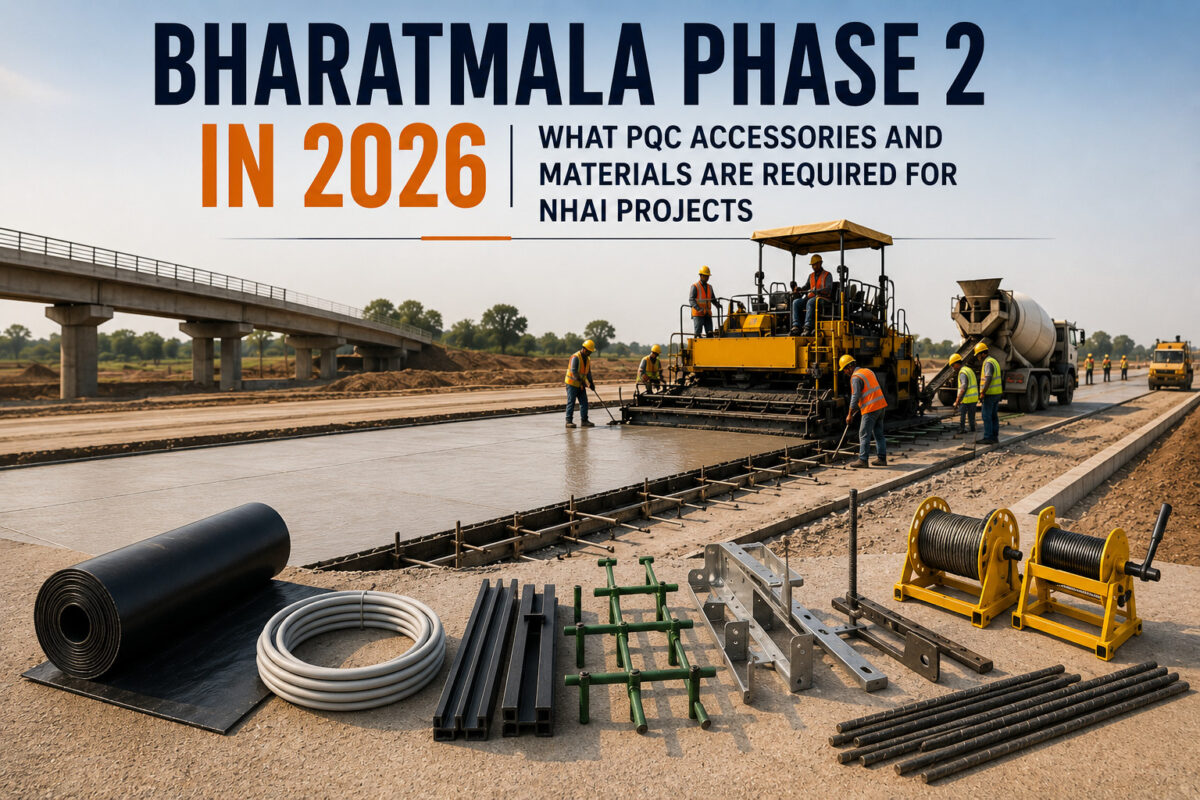
Accessories are where many contractors underestimate their planning. The list below covers the items a PQC highway pour typically depends on.
| Accessory | Role on a PQC Project |
| Separation membrane | LDPE debonding sheet between the DLC base and the PQC slab |
| Dowel bar sleeves and caps | Allow joint movement and expansion at transverse joints |
| Peg rods | Support the string line for grade control |
| Sensor wire | The reference line the paver follows for line and level |
| Winch stand | Tensions the string line to remove sag |
| Concrete floater | Hand finishing of the slab surface |
| Texturing brush | Creates the skid resistant surface texture |
| Expansion joint board | Compressible filler at expansion joints |
| Groove-cutting blade | Cuts contraction and other joints in the slab |
| Sealant and primer | Seals the cut joints against water and debris |
| Backer rod | Backs the sealant in the joint groove |
| Crack repair materials | Treat any random cracks that appear |
| DWC pipe | Used where cross drainage or duct provision is required |
Alongside these, the project needs the right machinery available and serviced, including a groove cutting machine, needle vibrators, screed vibrators, a power trowel, and a bandsaw machine for accurate cutting of steel bars. Accessories and machines together form the kit that keeps a concrete pour moving.
Step by Step: Planning Accessories for an NHAI PQC Project
1. Read the design and specification: Identify every joint type, dowel, and tie bar detail and surface requirement from the project documents.
2. Build the accessory schedule: List every accessory the project needs, from separation membrane to joint sealant, with quantities tied to the paving program.
3. Confirm specifications: Make sure each accessory is specified correctly, for example, virgin LDPE membrane at the right thickness and dowel sleeves to the right bar size.
4. Plan lead times: Order ahead so accessories arrive before paving, not during it.
5. Match machinery to the program: Confirm groove cutting machines, vibrators, trowels, and other plants are available and serviced.
6. Stage materials on site: Store cement, aggregates, steel, membrane, and joint materials properly and keep them protected.
7. Keep spares: Hold spare membrane rolls, blades, and joint materials so a shortage never stops a pour.
8. Review against progress: Reconcile the accessory schedule against actual paving progress and reorder in good time.
Common Mistakes to Avoid
• Treating accessories as a last-minute buy: Lead times exist, and a fast-tracked job will not wait.
• Ordering to a vague specification: Generic items can fail to meet NHAI project requirements.
• Underestimating quantities: A short order stops the pour at the worst moment.
• Ignoring machinery readiness: Accessories are useless if the groove cutting machine is down.
• No spares on site: A single blade or membrane shortage can cost a sawing window or a pour.
• Poor storage: Membrane left in the sun or steel left to rust fails before it is used.
• Not verifying current project requirements: Always confirm the specification and scope from official sources.
Best Practices for NHAI PQC Projects
• Build a complete accessory and material schedule from the project design at the start.
• Specify every item correctly and to the project specification, not generically.
• Confirm current program and project details from official NHAI and MoRTH sources.
• Order with realistic lead times so nothing arrives late.
• Keep machinery serviced and matched to the paving program.
• Store all materials and accessories properly and keep critical spares.
• Treat the accessory supply chain as part of project planning, not as procurement detail.
Conclusion
Bharatmala Pariyojana continues to drive a strong pipeline of highway work, and a significant share of that work is rigid pavement built as PQC. For a contractor, the opportunity is real, but so is the demand for tight planning.
PQC is a sequenced form of construction, and it runs on a defined kit of materials and accessories. From the separation membrane and dowel sleeves to peg rods, sensor wire, groove cutting blades, and joint sealant, every item has a job and a moment when it is needed. The contractors who deliver NHAI concrete projects smoothly are the ones who schedule that kit from the design stage, specify it correctly, and keep it ready. Always confirm current project requirements from official sources and plan the supply chain early, and the construction side will keep pace with the program.
Frequently Asked Questions
What is Bharatmala Pariyojana?
Bharatmala Pariyojana is the Government of India’s flagship highway development program, delivered mainly through the National Highways Authority of India. It develops economic corridors, expressways, and key highway links to improve road connectivity across the country.
What is the status of Bharatmala Phase 2 in 2026?
By 2026, planning and development for the later phase of the program will have been progressing, with additional corridors identified beyond the original Phase 1 scope. Because programme details change, contractors should confirm the current scope from official NHAI and MoRTH sources.
Why is PQC used on NHAI highway projects?
PQC, or pavement quality concrete, suits high-traffic corridors because rigid pavement carries heavy commercial traffic well, performs reliably in hot conditions, resists rutting, and offers a long service life with relatively low maintenance.
What PQC accessories are needed for an NHAI project?
Typical PQC accessories include the separation membrane, dowel bar sleeves and caps, peg rods, sensor wire, a winch stand, a concrete floater, a texturing brush, an expansion joint board, groove cutting blades, joint sealant, primer, backer rod, and crack repair materials.
What materials are required for PQC highway construction?
The core materials are approved cement, hard and well graded aggregates, clean water, admixtures, and steel for dowel and tie bars, along with curing materials. Fibre such as PPE fibre or glass fibre may be specified where the design calls for it.
How should a contractor plan accessories for a PQC project?
A contractor should build a complete accessory schedule from the project design, specify each item correctly, order with realistic lead times, match machinery to the paving programme, store everything properly, and keep critical spares on site.
Which machines support PQC construction on NHAI jobs?
Key machines include the slipform or fixed form paver, groove cutting machine, needle vibrators, screed vibrators, a power trowel, and a bandsaw machine for cutting steel bars accurately.
Why is accessory planning important on fast tracked highway projects?
Fast tracked highway projects run on tight schedules, and PQC is a sequenced operation. A missing accessory, such as a membrane or a cutting blade, can stall a pour or a sawing window, so planning the supply chain is part of delivering on time.
Related Blogs
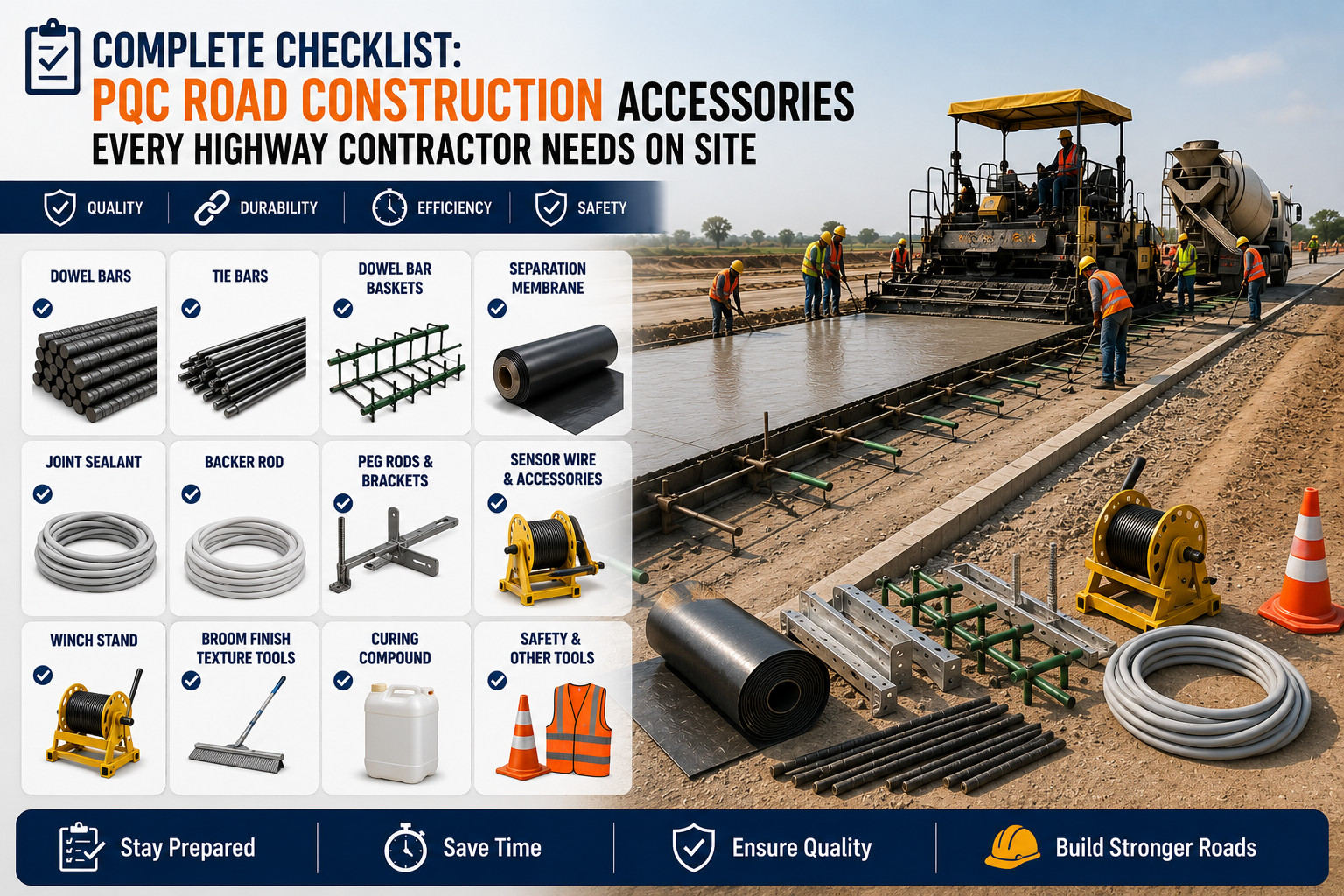
Complete Checklist: PQC Road Construction Accessories Every Highway Contractor Needs on Site
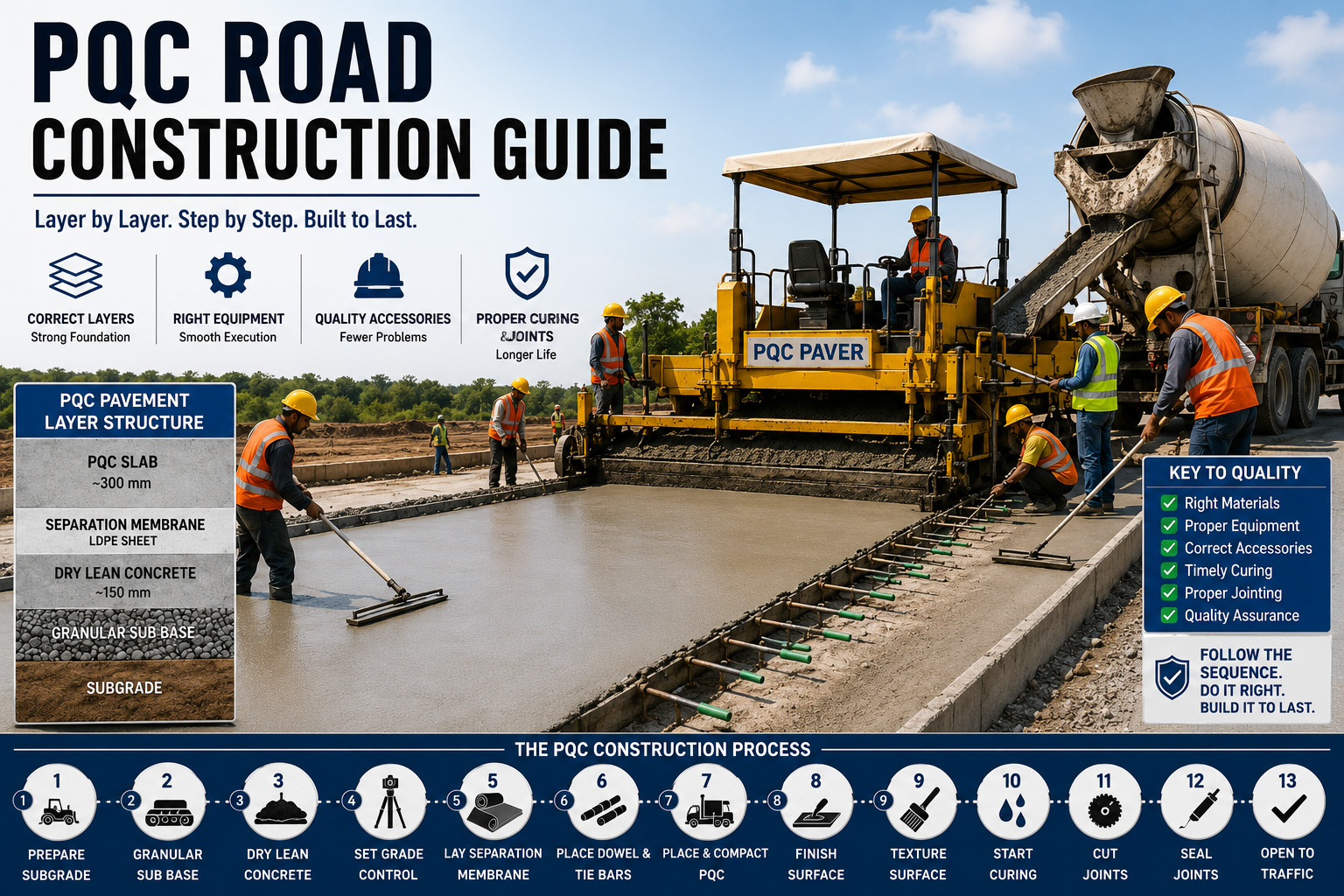
PQC Road Construction Step by Step: Materials, Equipment, and Accessories Required
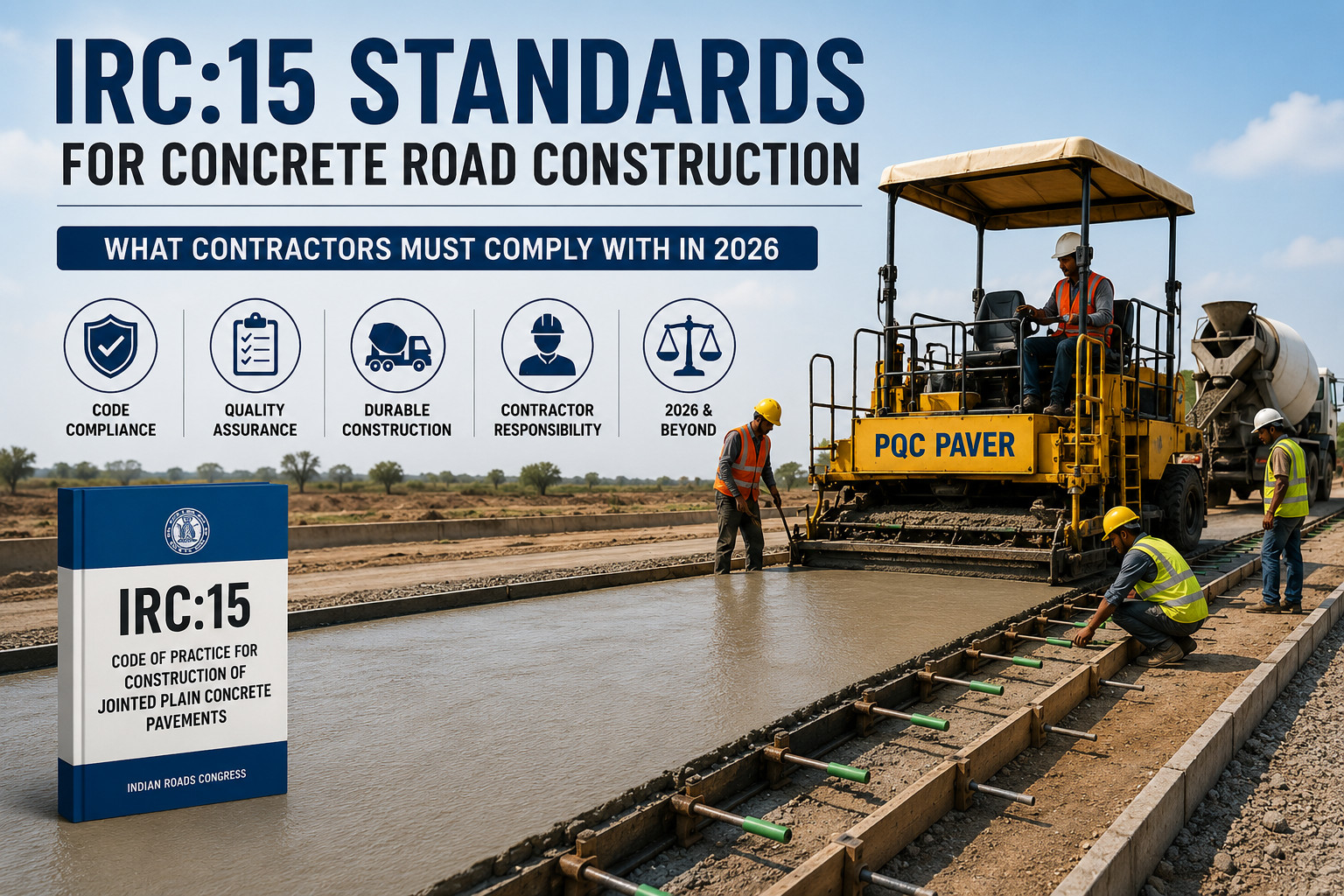
IRC:15 Standards for Concrete Road Construction: What Contractors Must Comply With in 2026