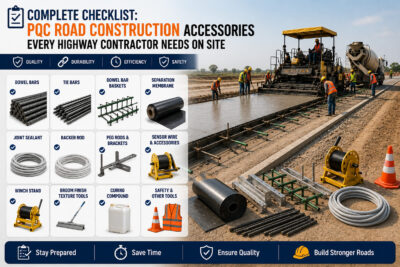

Sensor Wire & steel wire rope

Sensor / Rope Wire

Material: Manufactured from high-quality mild steel (MS), this sensor wire combines durability and flexibility, essential for use in demanding construction environments.

MaterialMS Galvanized
Packaging Sizes1000 mtr coil
Thickness2mm/3mm/5mm/10mm/12mm and so on.
Structure6×7 / 7×7

Sensor Wire for Paver | Steel Wire Rope Manufacturer in India

Aspire Enterprises manufactures and supplies sensor wire for paver machines used in PQC road construction across India. This is the steel wire rope that feeds a continuous grade reference into the paver’s sensor system, and it is one of those products that only gets attention when it fails. A wire that stretches, kinks, or loses tension mid-pour throws off the paver’s grade reading before anyone on site notices, and by then the correction is already baked into the slab.

We supply sensor wire in 2mm and 3mm sizes, made from quality steel for consistent tension and minimal stretch across long paving runs.

What Is Sensor Wire?

Sensor wire is a steel wire rope stretched taut along a paving lane, anchored at intervals using a peg rod, and used by the paver’s automated sensor to read grade and alignment as the machine moves forward. It works the same way a manual string line does, except the paver’s sensor reads it continuously and adjusts the screed automatically instead of relying on an operator checking levels by eye.

Steel wire rope for this purpose needs to resist stretch under tension, since a wire that gives even slightly over a long run introduces a grade error that the paver has no way of detecting on its own. This is exactly what separates a proper sensor wire from a generic wire rope, and it is worth checking with your supplier that the separation membrane work underneath and the sensor wire setup above it are being planned together, since both need to be in place before the paver starts moving.

Why Sensor Wire Accuracy Matters

A PQC road is only as flat as the reference line the paver is reading, and the sensor wire is that reference line. If the wire sags between anchor points, stretches under load, or loses tension partway through a shift, the paver’s screed follows that error automatically, since the sensor has no independent way of knowing the line has drifted

This becomes especially critical on sections approaching a dowel bar sleeve assembly, where joint elevation on both sides of the transverse joint needs to line up precisely, or near an expansion joint board, where the finished grade has to match an adjoining structure exactly. A wire that holds tension consistently is what keeps these transition points accurate instead of leaving a visible dip or hump right where it matters most.

Sensor Wire Specifications

Size

Typical Use

2mm

Standard grade control setups on most PQC highway paving

3mm

Longer paving runs and setups needing extra resistance to stretch

Both sizes are made from steel wire rope selected for tension holding rather than general-purpose use, which matters more than it sounds. A wire rope built for lifting or towing is not necessarily built to hold a straight, stretch-free line across fifty or a hundred meters of continuous paving, and using the wrong grade shows up as a slow, hard-to-diagnose grade drift rather than an obvious failure.

How Sensor Wire Fits the Grade Control Setup

Sensor wire does not work in isolation. It runs between anchor points, gets tensioned using a winch stand to remove sag along the line, and feeds the paver’s sensor a steady reference as the machine advances. Once the pour is placed against this reference, finishing tools like a texturing brush complete the surface exactly along the grade the sensor wire established in the first place.

Treating these as one connected setup, rather than separate line items on a purchase order, is what keeps the whole grade control chain accurate from the first meter to the last.

Site Practices for Sensor Wire Setup

Getting consistent results from sensor wires comes down to a few basics done properly every time. Check tension along the full length before the paver starts moving, not just at the anchor points, since a wire can look taut at both ends while still sagging in the middle over a long run. Inspect the wire for kinks or damage before each use, since a single kink changes the wire’s straight-line path and introduces a small but real grade error at that exact point.

It also helps to walk the line and sight down it the way you would check a screed vibrator pass or a needle vibrator placement pattern, catching small issues before the paver reaches them rather than after the concrete has already gone down.

Why Choose Aspire Enterprises for Sensor Wire

We manufacture sensor wire in 2mm and 3mm sizes using steel selected for low stretch under tension, built to hold a consistent grade reference through a full working shift rather than needing constant re-tensioning. Ordering sensor wire alongside the peg rod and winch stand it works with keeps your entire grade control setup consistent and sourced from a single, accountable supplier.

We supply pan-India to highway contractors, EPC firms, and government construction departments, with the same bulk dispatch capacity available across our full product range.

Conclusion

Sensor wire is a small item that carries an outsized share of responsibility for how flat and accurate a PQC road turns out to be. Choose the right size, keep it properly tensioned, and inspect it regularly, and the paver’s grade control system does its job without surprises. Aspire Enterprises supplies sensor wire in 2mm and 3mm sizes, built for consistent performance across highway, expressway, and industrial paving projects.

Frequently Asked Questions

A sensor wire is the tensioned steel string line that a slipform paver senses for grade and alignment. The sensor arm on the paver rides the wire, and the screed adjusts continuously to match the design profile, producing a smooth and accurately graded concrete slab.

The 2 mm sensor wire is the standard string line for sensor-guided pavers on Indian highway projects. The 3 mm wire rope is used for heavier tensioning applications and longer runs.

They are the same product family. Sensor wire is the term used when the wire serves as a paver string line. Steel wire rope is the broader term covering the same wire used for industrial lifting and tensioning applications.

Yes. Our steel wire rope is supplied with a galvanised finish for resistance to rain, humidity, and chemically active site conditions. Stainless steel wire rope is available on request for highly corrosive or marine applications.

Standard packaging is a 1000 meter coil per spool. Custom cut lengths are available on request for specific paving stretches or industrial applications.

Yes. Aspire Enterprises supplies the complete string line system, including peg rod, sensor wire, sensor rod and holder, and winch stand, on a single purchase order.

Our standard constructions are 6 x 7 and 7 x 7 strand for the right balance of flexibility, tensile strength, and resistance to kinking on the drum.

Share the diameter required, the number of coils or cut lengths, and the project location through the enquiry form. The team confirms stock and dispatch the same business day.

RELATED BLOGS

Aspire Enterprises – Building Reliable Infrastructure Since 2016. Committed to quality materials, precision machinery, and customer satisfaction.

Contacts

Location

 All Rights Reserved The Aspire Enterprises 2025 | Developed By  The Marketing Bots