Introduction
A slipform paver is a powerful machine, but it does not know where the road is supposed to be. It has no idea of the design level or the alignment. It simply follows a reference, and on most concrete paving jobs, that reference is a string line.
The string line is the invisible backbone of grade control. If it is set accurately and held steady, the paver lays a slab that is true to line and level, and the finished road rides smoothly. If the string line sags, drifts, or shifts, every one of those errors is copied straight into the concrete, where it becomes permanent.
This guide explains how stringline setup works, how peg rods and sensor wire work together to hold the line, and how to set up the whole system so the paver delivers the grade control the design demands.
What is a String Line Setup in Concrete Paving?
String line setup is the process of installing a tensioned reference line alongside the paving lane so a slipform paver can sense it and control its own elevation and steering.
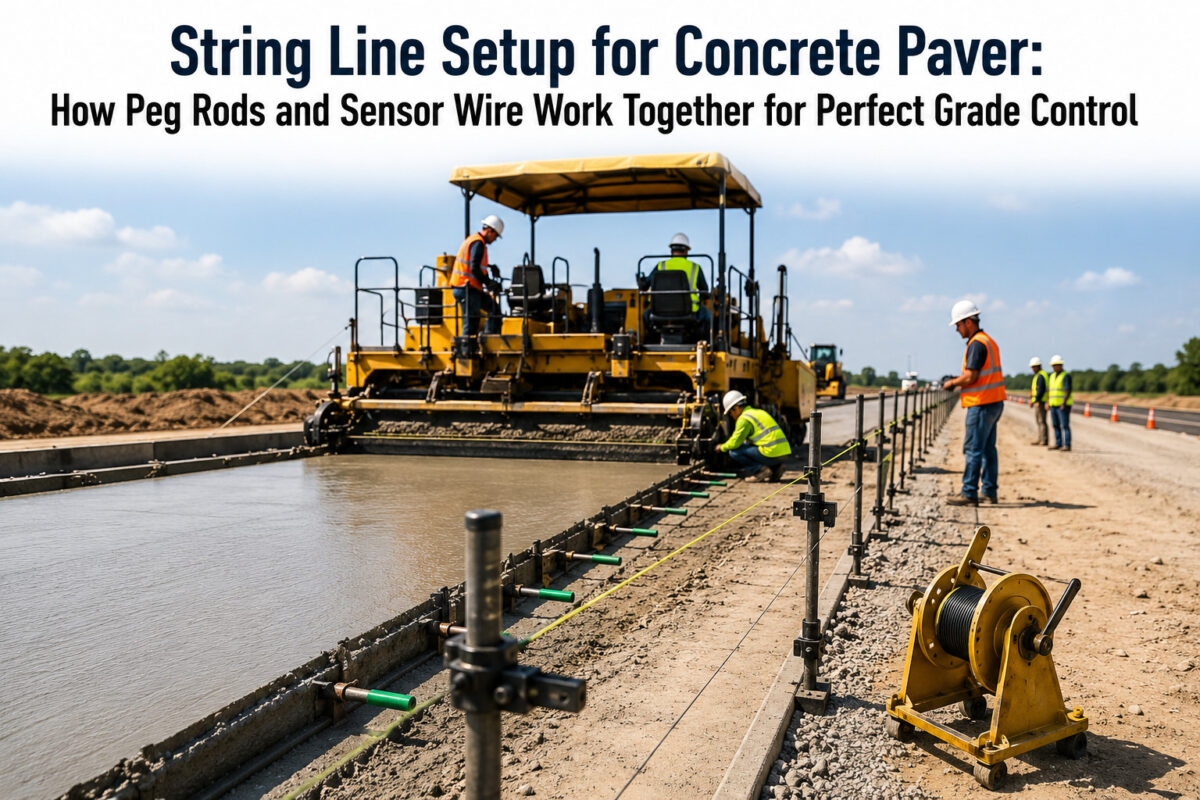
The string line is not an ordinary string. It is a thin, strong wire rope, often a braided sensor line made for this exact purpose. It runs the full length of the paving run, supported at regular intervals and set precisely to the design grade. As the paver moves forward, sensors on the machine ride against this line and feed continuous corrections to the paving controls.
In short, the string line turns a survey design into a physical edge the machine can feel. Everything about grade control on a conventional paving job depends on that line being right.
Why Grade Control Matters
Grade control is about two things at once: how the road sits in space, and how it feels to drive on.
- Ride quality: A road that wanders up and down in small waves gives a rough, tiring ride and accelerates wear on vehicles. Smoothness is a direct measure of paving quality.
- Correct levels: The slab has to match the design profile so it connects properly with structures, drainage, and adjoining work.
- Consistent slab thickness: If the surface follows a wavy line, the slab thickness varies. Thin spots are weak spots.
- Drainage: Cross fall and longitudinal grade have to be accurate so water runs off instead of ponding.
A paver can only deliver all of this if its reference is accurate. The machine is faithful. It will reproduce whatever the string line tells it, good or bad. That is why the saying on paving sites is simple: the road can only be as good as the string line.
The Components of a String Line System
Several parts work together to hold an accurate line. Each one matters.
Peg rods:
These are the stakes driven into the ground at regular intervals along the paving lane. They are the structural supports that carry the string line. Peg rods have to be firm because anything that moves a peg rod moves the line.
Brackets and arms:
Adjustable brackets fix to the peg rods and carry the wire. They allow fine adjustment of the line to the exact design level and offset.
Sensor wire:
This is the string line itself, the thin wire rope that the paver senses. A good sensor wire is strong, low-stretch, and weather-resistant, so it holds tension and shape across long runs.
Winch stand:
At the end of the run, a winch stands tension on the sensor wire. Correct tension is what pulls the sag out of the line between supports.
Grade hubs and survey marks:
The survey crew sets reference hubs from the design. These are what the peg rods and brackets are set against. The accuracy of the whole system starts here.
Peg rods hold the line up, the winch stand pulls it tight, the sensor wire carries the signal, and the survey hubs tell everyone where the line should be. Take any one away and grade control suffers.
How a Paver Follows the String Line
A slipform paver senses the string line with sensors mounted on arms that reach out to the line. Two separate things are being controlled.
Elevation:
An elevation sensor rides against the underside of the string line. As the line rises or falls to follow the design profile, the sensor moves with it, and the paver raises or lowers its paving level to match.
Alignment:
An alignment sensor rides against the side of the string line. As the line curves or shifts, the sensor follows, and the paver steers to stay parallel.
Most pavers sense a line on each side, so elevation and crossfall are both controlled at once. Because the machine is constantly reading the line and correcting, any fault in the line becomes a fault in the slab. A sag between two supports does not average out. It shows up in the finished surface as a wave you can feel from a moving vehicle.
This is also why modern projects sometimes use stringless paving, where a 3D machine control system uses survey instruments and a digital design model instead of a physical wire. Stringless paving removes the wire, but on the majority of jobs, the string line remains the practical, reliable method, and it has to be set with care.
Step by Step: Setting Up the String Line
- Start from the survey. Have the survey crew set grade hubs and reference marks from the design model along the paving lane.
2. Plan the support spacing. Decide peg rod spacing based on the line and the run. Closer spacing on curves and vertical changes keeps the line true.
3. Drive the peg rods firmly. Set each peg rod solidly into the ground so it cannot move under tension or from site traffic.
4. Fit the brackets. Attach the adjustable brackets and arms that will carry the sensor wire.
5. Run out the sensor wire. String the wire along the full run, fix one end, and route it through every bracket.
6. Tension with the winch stand. Use the winch stand to pull the wire to a firm, consistent tension. Good tension is what removes sag between supports.
7. Set the line to grade. Adjust each bracket so the wire sits exactly at the design level and offset, checking against the survey marks.
8. Check for sag. Sight along the line between supports. If you see sag, add tension or add a support. The line must look straight.
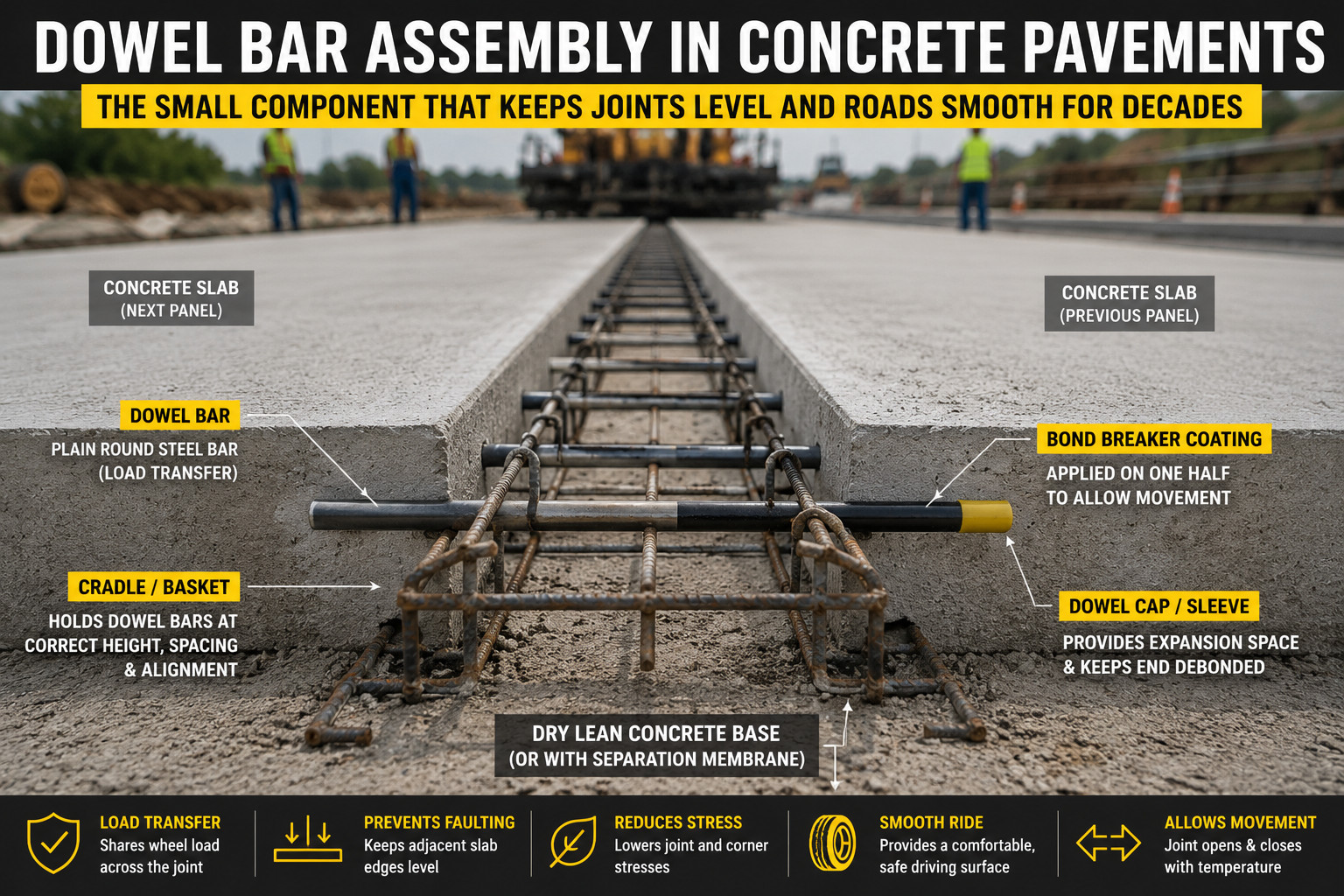
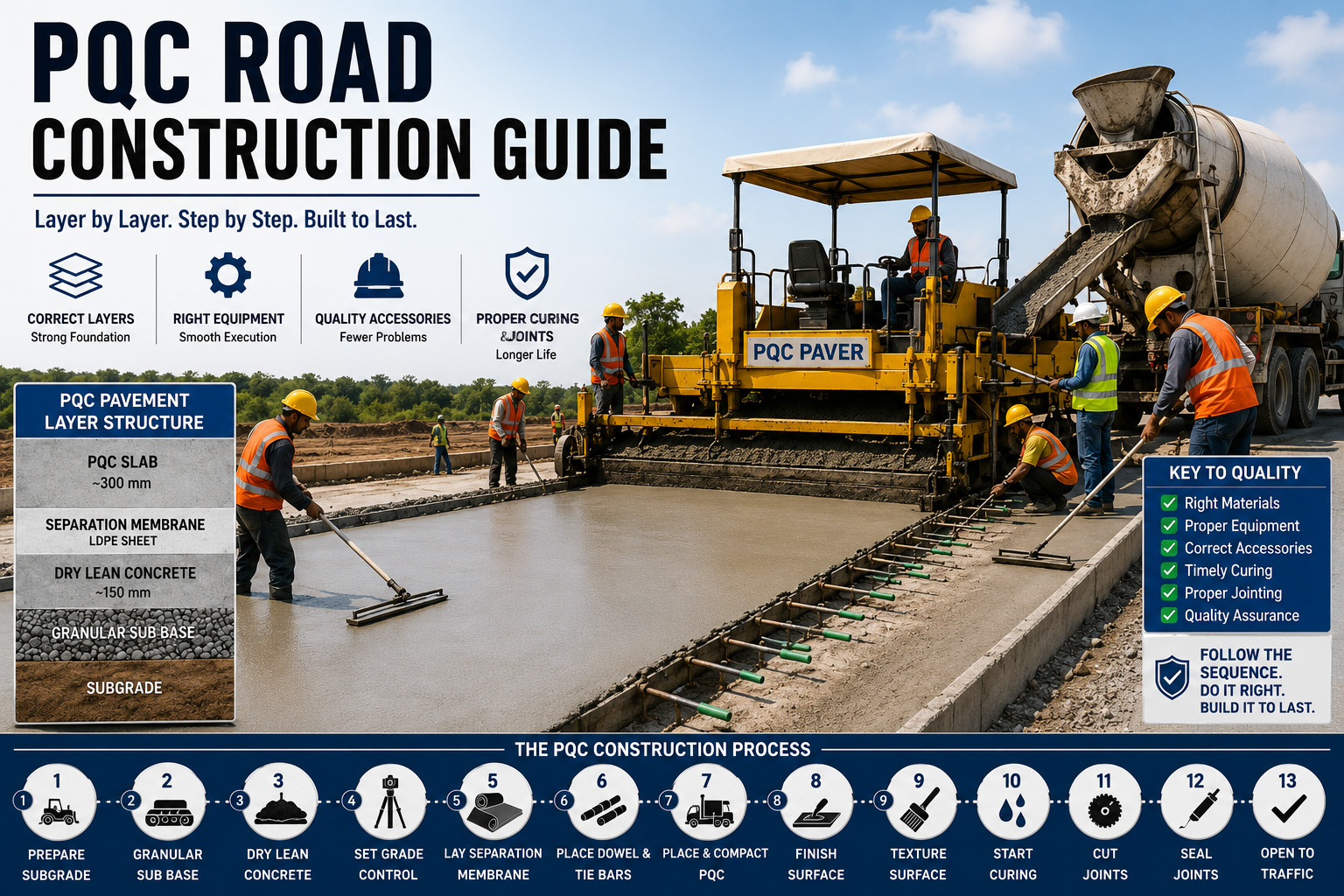
9. Protect the line. Keep the line clear of plant, workers, and the separation membrane and dowel work happening alongside it. A knocked line is a knocked grade.
10. Recheck before paving. Walk the line one last time just before the paver starts, confirming level, alignment, and tension.
Tensioning and the Role of the Winch Stand
Tension is a part of string line setup that gets rushed, and it should not be. A sensor wire that is not tight enough will sag under its own weight between supports. That sag is real and measurable, and the paver reads it as a dip in the profile.
The winch stand exists to solve this. It anchors and tensions the wire to a firm, repeatable load so the line pulls straight. Higher, even tension reduces the sag between peg rods and gives the paver a clean signal to follow.
Two habits make tensioning reliable. First, tension the wire consistently across the whole run, not tight in one place and loose in another. Second, recheck tension after the line has settled, because a wire often relaxes a little after it is first pulled. A few minutes spent confirming tension protects the smoothness of the entire run.
Common Mistakes to Avoid
- Loose peg rods: A peg rod that can move makes every reading off that point unreliable.
- Support spacing is too wide: Wide spacing lets the wire sag, especially on curves and grade changes.
- Under tensioning the wire: A slack line sags, and the sag becomes waves in the slab.
- Uneven tension: Tight in some places and loose in others gives an inconsistent line.
- Setting the line from a poor survey: If the grade hubs are wrong, a perfectly set line is still wrong.
- Knocking the line during other work: Membrane laying, dowel placement, and plant movement can all disturb the line.
- Not rechecking before the pour: Lines move. A final walk catches problems before they reach the concrete.
- Reusing stretched or kinked wire: A damaged sensor wire will not hold a true line.
Best Practices for String Line Grade Control
- Always set the line from accurate survey hubs taken off the design model.
- Drive peg rods firmly and space them closer on curves and vertical curves.
- Use good-quality sensor wire that is strong and low in stretch.
- Tension the wire with a winch stand to a firm, even load, and recheck after settling.
- Sight along the line to confirm it is visually straight before paving.
- Keep the line protected from the plant and from the adjacent membrane and dowel work.
- Recheck level, alignment, and tension immediately before the paver starts.
- Assign one responsible person to own the string line for each run.
Conclusion
The string line is one of the most underrated parts of a concrete paving job. It is thin, quiet, and easy to walk past, yet it controls the line, the level, the slab thickness, and the ride of the entire run. The paver only ever reproduces what the line tells it.
Treat the string line setup as precision work. Set it from an accurate survey, support it on firm peg rods, carry it on quality sensor wire, and tension it properly with a winch stand. Sight it straight, protect it from disturbance, and recheck it before every pour. Do that, and grade control stops being a worry and becomes a result you can rely on, kilometre after kilometre.
Frequently Asked Questions
What is a string line in concrete paving?
A string line is a tensioned wire reference set alongside the paving lane that a slipform paver senses to control its elevation and steering. It physically represents the design grade and alignment so the machine can follow it.
How do peg rods and sensor wire work together?
Peg rods are the stakes that support the line, and the sensor wire is the line itself. The peg rods, fitted with adjustable brackets, hold the sensor wire at the exact design level and offset so the paver can sense it accurately.
Why does string line tension matter?
A sensor wire that is not tensioned enough sags under its own weight between supports. The paver reads that sag as a dip in the profile, which becomes a wave in the finished slab. Correct tension keeps the line straight.
What does a winch stand do in a string line setup?
A winch stand anchors and tensions the sensor wire at the end of a run. It applies a firm, consistent pull that removes sag between peg rods, giving the paver a clean and accurate line to follow.
How does a paver follow the string line?
A paver has sensors that ride against the string line. An elevation sensor rides the underside of the line to control paving level, and an alignment sensor rides the side of the line to control steering.
What happens if the string line is set wrong?
The paver faithfully copies the line into the concrete. A wrong level, a curve error, or a sag becomes a permanent fault in the slab, affecting ride quality, slab thickness, and drainage.
What is stringless paving?
Stringless paving uses a 3D machine control system with survey instruments and a digital design model instead of a physical wire. It removes the string line, but conventional string line paving remains the common, reliable method on most jobs.
How often should the string line be checked?
The string line should be checked during setup, after the wire settles following tensioning, and again immediately before the paver starts each run, since lines can be disturbed by site activity.