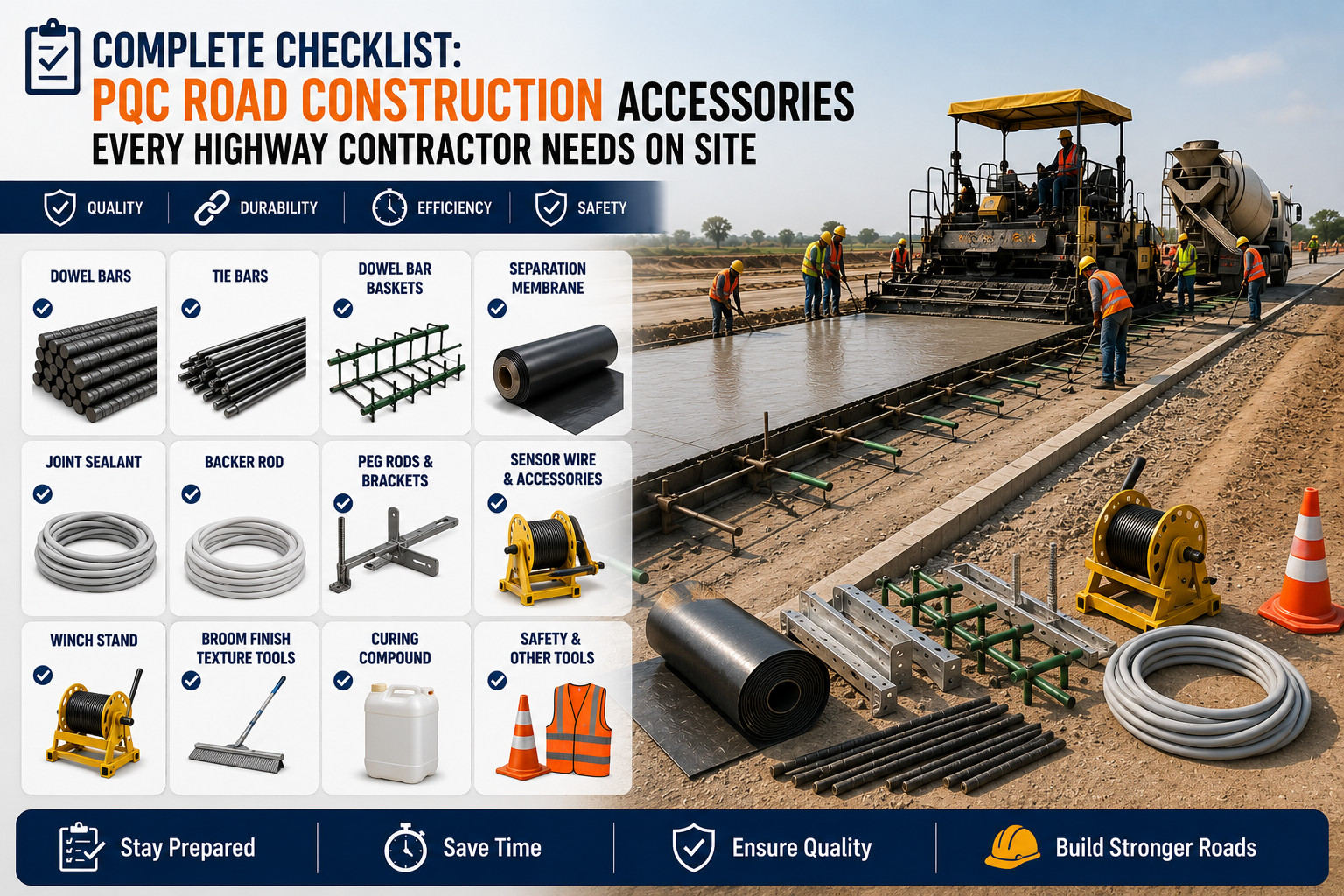

A road project is only as good as the materials that go into it, and the materials are only as good as the supplier standing behind them. On paper, most construction material suppliers look the same. Send an inquiry, get a quote, and place an order. In practice, the supplier you choose decides whether your project runs on schedule or stalls waiting for a delayed delivery and whether the accessories you install perform for decades or fail within a season.
Contractors often spend weeks finalizing the exact specification for a project, the concrete grade, the dowel bar diameter, and the membrane thickness and then hand the purchase order to whoever quoted the lowest number without applying the same scrutiny to the supplier itself. That gap is where a surprising number of site problems actually begin. A specification is only a promise on paper until a supplier delivers material that genuinely matches it.
This guide walks through how to actually evaluate a construction material supplier in India, not just compare price sheets. It covers the different types of suppliers you will run into, the factors worth checking before you commit, the red flags that should make you pause, and how to verify that the supplier you are about to sign with can actually deliver what they promise.
What is the best way to choose a construction material supplier?
The best way to choose a construction material supplier is to verify their product specifications match your project requirements exactly, confirm they provide IS or IRC-compliant test certificates, check their delivery track record, and request references from past projects before placing a bulk order.
Why Supplier Selection Matters as Much as Material Selection
Contractors spend a lot of time getting the material specification right, the correct grade of concrete, the right diameter of dowel bar, and the exact thickness of separation membrane. Then they hand the purchase order to whichever supplier quoted the lowest price, and the specification quietly starts to slip. A supplier who does not understand road construction will happily sell you a generic polythene sheet when the job needs virgin LDPE or a dowel bar sleeve in the wrong size, because to them it is just plastic and steel.
The supplier is the last checkpoint before a material reaches your site. If they do not test, store, or handle it correctly, all the specification work upstream is wasted. Choosing the right supplier is not a procurement formality. It is a quality-control decision that sits right alongside mix design and joint layout in terms of how much it affects the finished road.
This becomes especially clear on accessory items rather than bulk materials like cement or aggregate. Nobody substitutes cement without someone noticing, but a dowel bar sleeve that is a couple of millimetres out of specification, or a membrane that is thinner than called for, can pass through an unobservant site inspection and only show up as a problem years later, when the joint locks up or the slab starts cracking in a pattern that traces straight back to a material decision made at the procurement stage.
Types of Construction Material Suppliers in India
Not every supplier operates the same way, and understanding the differences helps you know what you are actually buying before you ever get to a quote.
Manufacturers vs Traders/Distributors
A manufacturer produces the material or accessory itself, which means they control the raw material quality, the production process, and the testing. A trader or distributor buys from a manufacturer and resells, often across multiple brands. Buying direct from a manufacturer usually gets you better pricing, more consistent quality, and someone who can actually answer technical questions about the product rather than just the price.
Distributors have their place for smaller order quantities or when you need multiple product categories from one source, and they can be genuinely useful for projects that need a wide spread of materials delivered together. But for anything specification-critical, such as joint sealants, dowel bar sleeves, or separation membranes where a small deviation genuinely affects performance, going direct to a manufacturer is worth the extra effort of finding the right one.
Regional vs Pan-India Suppliers
A regional supplier knows the local market, often has shorter delivery times to nearby sites, and may offer more flexible payment terms because they are competing for local relationships. A pan-India supplier usually has larger production capacity, more consistent stock across states, and a better ability to support multi-location projects like a highway corridor that spans several districts.
Neither is automatically better. A large NHAI corridor project that stretches across two or three states usually needs the reliability of a pan-India supplier who can guarantee consistent supply regardless of location. A single state road project or an urban CC road contract may be well served by a strong regional supplier who can turn deliveries around fast and adjust to changes in the paving schedule without the coordination overhead of a bigger organization.
Specialized Suppliers (joint accessories, sealants, membranes) vs General Suppliers
A general construction supplier stocks a bit of everything, cement, steel, aggregates, and accessories, without going deep on any of it. A specialized supplier focuses on a narrower category, such as joint accessories, sealants, and membranes, and usually understands the technical requirements of those products far better because it is their entire business rather than one line item among hundreds.
For accessories where getting the specification wrong causes real problems later, such as dowel bar sleeves, backer cord, or separation membranes, a specialized supplier is usually worth seeking out over a general one. They are more likely to hold proper stock in the exact sizes you need, more likely to have test documentation ready, and more likely to actually know why a certain thickness or grade was specified in the first place, which matters when something on site does not quite match the drawings and a quick technical answer is needed.
Key Factors to Evaluate Before Choosing a Supplier
A few practical checks separate a supplier worth working with from one that will cause problems later. None of these take long to run through, but skipping them is exactly how a project ends up locked into a poor supplier relationship for its full duration.
- Product range and specification match: confirm the supplier actually stocks the exact grade, size, and material type your project specification calls for, not a close substitute they are hoping you will accept.
- Test certification: ask whether they provide IS or IRC-compliant test certificates with every batch and whether you can request one before committing to an order, not just after the material has already arrived.
- Delivery capability: check their track record on lead times, especially for projects with tight paving schedules where a late delivery can stall a pour or push back an entire day’s programme.
- Technical support: a supplier who can answer specification questions and recommend the correct product for your application is worth more than one who only processes orders and leaves the technical decisions to you.
- Pricing structure: compare like for like specifications, not just the number on the quote, since a cheaper price on a lower grade material is not actually a saving once it fails to perform on site.
Order flexibility: check whether the supplier can handle both the bulk quantities a highway project needs and the smaller, urgent top up orders that inevitably come up mid project.
Red Flags That Indicate an Unreliable Supplier
A few warning signs are worth taking seriously before you place a large order, and most of them are visible during the enquiry stage if you are actually paying attention rather than just comparing.
- They cannot produce a test certificate or documentation on request, or they are vague about which standard their product meets when asked directly.
- Quoted prices are noticeably below the market rate with no clear explanation, which often means a lower grade or recycled material is being substituted for what was specified.
- Communication is slow or inconsistent during the enquiry stage, which usually gets worse once you have already committed to an order and have less leverage.
- They cannot confirm exact specifications such as thickness, diameter, or grade in writing, and prefer to keep descriptions vague or use approximate terms like just polythene sheet instead of virgin LDPE at a stated micron value.
- Past customers or site references are hard to obtain or the supplier is reluctant to share them, which is often a sign that the references would not actually be favourable.
How to Verify a Supplier’s Credibility
Before placing a significant order, a short verification process protects you from a costly mistake. Ask for a sample batch and test it independently rather than relying on the supplier’s own certificate alone, since a certificate from an earlier batch does not guarantee the same quality on the batch you actually receive.
Request references from other contractors or projects they have supplied, and actually call them rather than just noting that references exist. Ask specific questions about delivery reliability, whether the material matched the specification consistently across the full order, and how the supplier handled any issues that came up.
Check how long the company has been operating and whether they have supplied projects of a similar scale to yours, since a supplier used to small local orders may not have the production capacity or logistics experience a large highway corridor genuinely needs. If possible, visit the manufacturing facility or warehouse before committing to a large order, since a site visit tells you more about their quality control, storage conditions, and general seriousness than any brochure or phone call ever will.
How to Choose the Right Supplier for Your Project
Match the supplier to the project, not the other way around. For a small, single site job, a reliable regional supplier with fast turnaround may serve you better than a large pan-India firm with longer lead times and less flexibility around small urgent orders. For a multi-state highway corridor, prioritise a supplier with the production capacity and logistics network to support consistent delivery across locations, since inconsistent material quality between sites on the same project creates its own set of headaches during quality audits.
Whatever the project size, do not treat the accessory and joint material supplier as an afterthought behind the cement and aggregate supplier. Joint sealing failures and accessory problems are among the most common causes of premature pavement distress, and they trace back to procurement decisions made early in the project, often without the same scrutiny given to the bulk materials.
Aspire Enterprises supplies separation membranes, dowel bar sleeves, joint sealants, and the full range of PQC accessories directly from the manufacturer, with test documentation available on request. Reach out through the enquiry page to discuss specifications for your project and confirm availability against your paving programme.
It also helps to formalise the relationship once you have chosen a supplier, rather than relying on informal phone orders for the duration of the project. A simple rate agreement covering pricing, lead times, and quality expectations for the project’s full duration gives both sides clarity and gives you a documented reference point if a dispute over specification or delivery ever comes up later.
Frequently Asked Questions
Q1. What should I check first before finalizing a construction material supplier?
Start by confirming that the supplier’s product specifications exactly match your project requirements. Ask for test certificates and check whether they manufacture the product themselves or resell it from another source.
Q2. How should cement be stored on a construction site?
Cement should be stored off the ground on a raised platform, under cover, and protected from any moisture, with stacking height limited to avoid compacting the lower bags. It should also be used in the order it arrives, since even well-stored cement has a limited shelf life.
Q3. Does storage affect the shelf life of joint sealants?
Yes, joint sealants have a genuine shelf life and lose bonding performance if stored too long or exposed to heat and direct sun. Tracking batch dates and using older stock first prevents expired material from being used on a live joint.
Q4. What is the FIFO method in material storage and why does it matter?
FIFO stands for first in, first out, meaning older stock is used before newer stock rather than the reverse. It matters because materials with a shelf life, like sealants and cement, lose performance over time even when stored correctly, so rotating stock prevents older material from sitting unused until it degrades.
Q5. Can improperly stored aggregates affect concrete quality?
Yes, improperly stored aggregate can become contaminated with soil or mixed between different grading sizes, both of which affect the concrete mix design’s intended performance. Storing different aggregate sizes in separated stockpiles on a clean surface prevents this.
Related Blogs
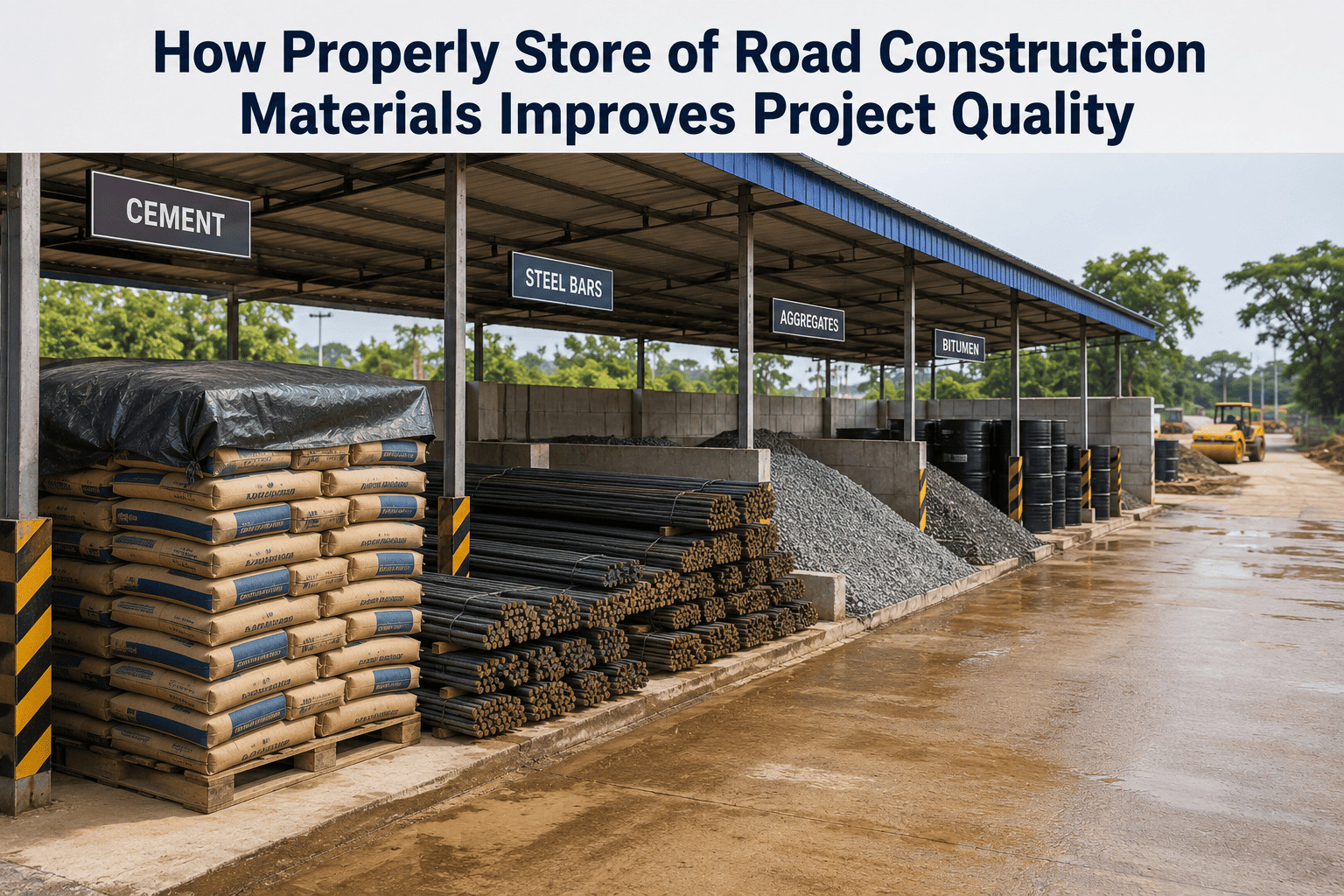
How Properly Store of Road Construction Materials Improves Project Quality
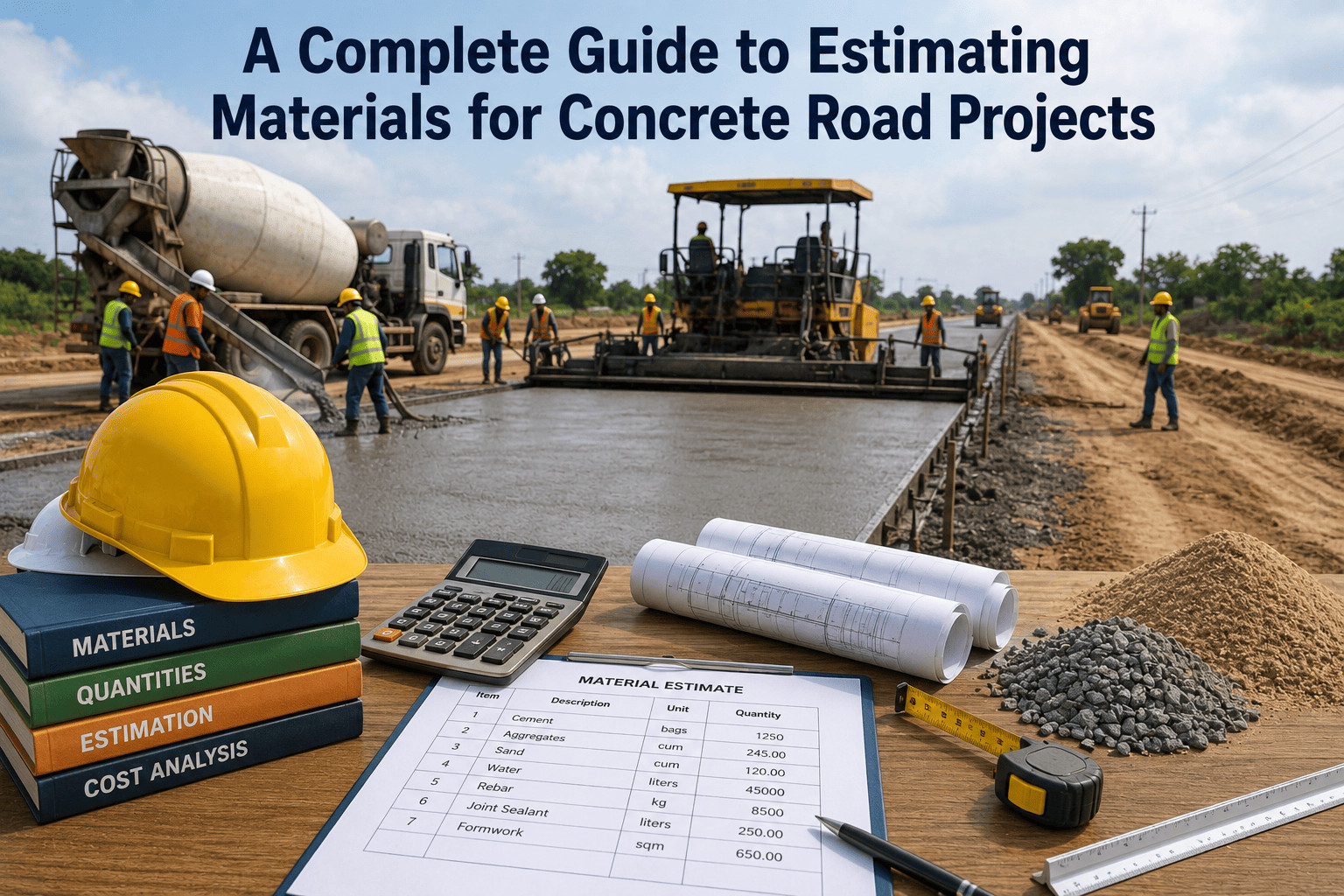
A Complete Guide to Estimating Materials for Concrete Road Projects
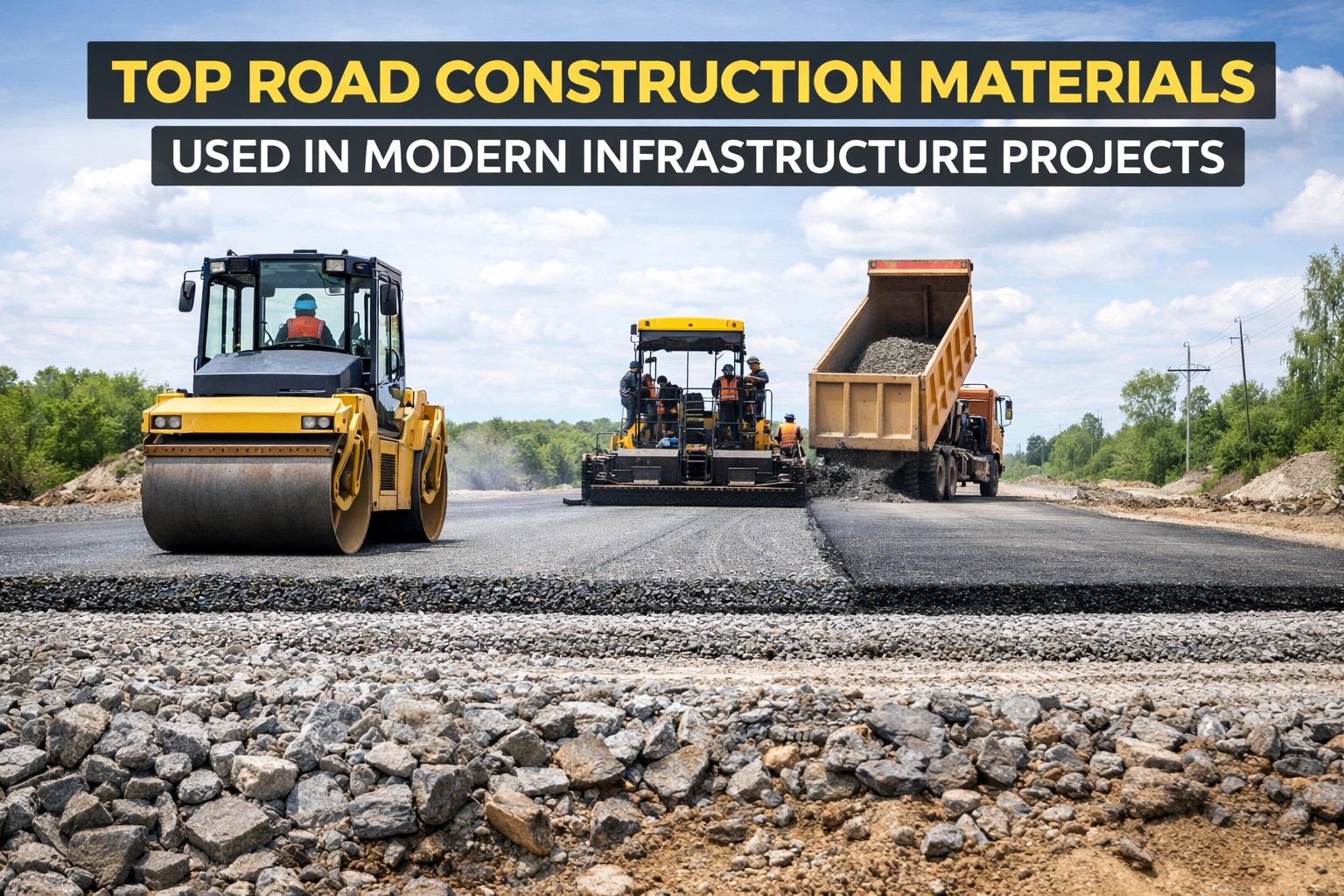
Top Road Construction Materials Used in Modern Infrastructure Projects