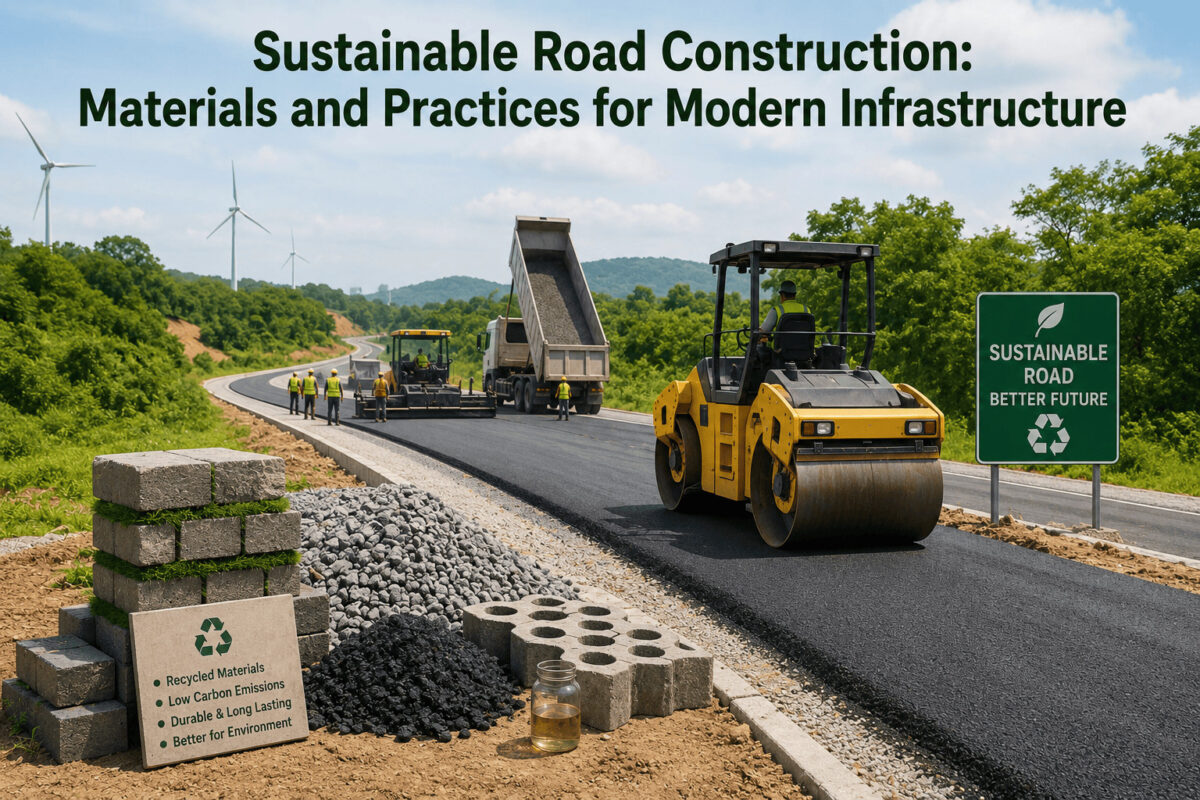
Sustainability in road construction used to be treated as a side conversation, something for a corporate presentation rather than an actual site decision. That has changed. Material costs, environmental compliance requirements, and genuine interest in reducing the carbon footprint of infrastructure projects have pushed recycled and lower-impact materials into mainstream use on Indian highway projects.
Part of what changed is scale. When a handful of pilot projects use recycled material, the impact is marginal. When it becomes standard practice across a highway program the size of Bharatmala Pariyojana, even a modest percentage shift in material sourcing represents a genuinely large reduction in virgin material demand, transport movements, and associated emissions.
This guide looks at what sustainable road construction actually means in practice, the materials and practices being used on real projects today, and the genuine benefits and challenges involved in adopting them, without overselling sustainability as a free upgrade that comes with no trade-offs at all.
What are the most common sustainable materials used in road construction?
The most common sustainable materials in Indian road construction are reclaimed asphalt pavement, typically used at a 15 to 30 percent substitution; fly ash as a partial cement replacement in concrete; warm mix asphalt produced at lower temperatures; and geotextiles for soil stabilization over weak subgrade.
Why Sustainability Matters in Road Construction
Road construction consumes enormous volumes of aggregate, cement, and bitumen, all of which carry a real environmental and financial cost to produce and transport. Quarrying aggregate disturbs land; cement production is genuinely carbon-intensive; and moving heavy raw materials over long distances by road burns fuel and adds wear to the very infrastructure being built.
At the scale India is building highways under programs like Bharatmala Pariyojana, even a modest percentage reduction in virgin material use across a project adds up to a significant saving in costs and emissions. Sustainability is not only about environmental compliance. It is increasingly a practical way to control material costs on large projects, particularly as recycled and by-product materials often carry a lower price than freshly quarried or manufactured alternatives.
Government policy is also pushing in this direction. MoRTH circulars increasingly encourage or mandate minimum percentages of recycled content in specific applications, which means sustainable material knowledge is becoming a compliance requirement rather than an optional differentiator for contractors bidding on public infrastructure projects. Staying ahead of these requirements, rather than scrambling to meet them once they become mandatory on a specific tender, is a genuine competitive advantage.
Sustainable Materials Used in Modern Road Construction
Choosing between these materials is rarely an either-or decision. Most modern highway projects combine several of them: RAP in the bituminous layers, fly ash in the concrete, and geosynthetics in problem soil sections, applied wherever each one makes the most technical and financial sense for that specific part of the alignment rather than as a single blanket policy across the whole project.
A handful of materials have moved from experimental status to genuinely standard practice on Indian road projects, each addressing a different part of the construction process.
Recycled Aggregate and RAP (Reclaimed Asphalt Pavement)
Reclaimed asphalt pavement is milled surface material from an existing road, reused as an input in new hot mix production. On current Indian highway contracts, RAP is commonly used at 15 to 30 percent substitution in new bituminous layers within MoRTH specifications. This reduces the volume of virgin aggregate and fresh bitumen that needs to be purchased and transported, which adds up quickly on a major project.
RAP is particularly useful on rehabilitation projects, where the existing road surface being replaced becomes the raw material for its own resurfacing, cutting out a significant amount of the material logistics that a fully new build would otherwise require.
Fly Ash and Industrial By-products in Concrete
Fly ash, a by-product of coal-fired power generation, is used as a partial cement replacement in concrete mixes. It reduces the cement content required, which lowers both cost and the carbon footprint associated with cement production, while contributing to concrete durability when used within specified limits. Other industrial by-products, such as slag from steel production, are used in a similar way in some regions.
India produces a large volume of fly ash from its power sector, and using it constructively in concrete addresses two problems at once, reducing cement demand and giving productive use to a material that would otherwise need to be disposed of.
Warm Mix Asphalt vs Hot Mix Asphalt
Hot mix asphalt is produced and laid at high temperatures, typically 150 to 180 degrees Celsius. Warm mix asphalt uses foaming agents or chemical additives to allow the bitumen to coat aggregate properly at lower temperatures, usually 100 to 140 degrees Celsius. The lower temperature reduces fuel consumption and emissions during production and allows paving in weather conditions or urban locations where a hot mix crew would face complaints about smoke or heat.
Warm mix asphalt is particularly suited to night paving operations in urban areas, where reduced fumes and lower surface temperature make the work more manageable for both the crew and nearby residents.
Geotextiles and Geosynthetics for Soil Stabilisation
Geotextiles and geogrids improve load distribution over weak subgrade soil and can reduce the thickness of granular subbase required over poor ground. On projects with waterlogged or expansive soil, this can mean less quarried material is transported to the site, which is both a cost saving and a reduction in the project’s material footprint.
On black cotton soil, common across large parts of central India, geosynthetics can make the difference between a workable subbase design and one that requires excessive over-excavation and replacement, which is itself a significant material and cost saving beyond the purely environmental benefit.
Sustainable Construction Practices on Site
Beyond material choice, several site practices contribute to a more sustainable build. Cold In-Place Recycling mills the existing road surface and relays it as a stabilised base course in a single pass, avoiding the need to haul milled material away and haul new aggregate in to replace it. This single pass approach is often significantly faster than a full reconstruction as well, which shortens the road closure period for a rehabilitation project.
Careful material estimation reduces wastage from over ordering, since surplus material that is not used often ends up discarded rather than returned. Proper storage practices, particularly for materials like cement and bituminous products, prevent spoilage that would otherwise mean discarding usable material simply because it degraded while sitting in the wrong storage conditions.
Energy-efficient plant operation is another practice gaining traction, including scheduling batching and paving plant operations to reduce idle running time, and maintaining equipment properly so it runs at its designed efficiency rather than burning extra fuel to compensate for poor upkeep. None of these practices require exotic technology; they simply require treating efficiency as a deliberate site management goal rather than an afterthought.
Waste segregation at the site level, keeping surplus concrete, excess aggregate, and packaging materials sorted rather than mixed, also makes it easier to recover or recycle what would otherwise be sent to landfill, and this kind of housekeeping discipline tends to reflect the broader quality culture of a site more generally.
Benefits of Sustainable Road Construction
The benefits go beyond environmental compliance. Recycled materials often cost less than virgin material, directly reducing project budgets, which matters on projects where every material cost is under scrutiny. Reduced transport of aggregate and milled material cuts fuel costs and vehicle movements on and around the site, which also reduces wear on local roads used for material haulage.
Lower production temperatures for materials like warm mix asphalt reduce energy costs at the plant, a saving that compounds across a large production run. On projects with sustainability requirements written into the contract, using these materials and practices correctly is also simply a compliance requirement worth understanding well, since falling short on a specified sustainability target can create contractual issues separate from the technical performance of the road itself.
There is also a reputational dimension that matters increasingly for contractors bidding on public projects. Demonstrating a track record of successfully using recycled materials and lower-impact practices can be a genuine differentiator in tender evaluations, particularly as sustainability criteria become a more explicit part of how public infrastructure contracts are scored and awarded.
Long-term, contractors who build genuine expertise in sourcing and specifying these materials correctly put themselves ahead of competitors as sustainability requirements tighten across future tenders, since that expertise takes real project experience to develop and is not something that can be acquired quickly once a tender deadline is already close.
Challenges in Adopting Sustainable Practices
Sustainable materials are not a straightforward swap for conventional ones. RAP content needs to be carefully controlled and tested, since too high a proportion can affect mix performance, particularly the aged bitumen already present in the reclaimed material interacting unpredictably with fresh binder.
Fly ash sourcing and quality can vary by supplier and region, and using an inconsistent supply undermines the durability benefits it is meant to provide. Contractors and site teams unfamiliar with these materials sometimes default back to conventional methods simply because it is what they know, even when the sustainable option is available and specified, which points to a training and familiarity gap as much as a technical one.
Cost perception is another barrier, even though the materials themselves are often cheaper. Some project teams assume sustainable materials require expensive specialist equipment or processes, when in reality most of the additional cost, where it exists at all, comes from the testing and quality control needed to use the material correctly rather than from the material itself. Clearing up this misconception early in project planning helps avoid sustainable options being dismissed without a proper cost comparison.
How to Incorporate Sustainable Practices in Your Project
Start with the materials that have the clearest track record on Indian projects, such as RAP within MoRTH-specified limits and fly ash in concrete mix design, since these have well-established specifications and a body of project experience behind them.
Confirm supplier quality and consistency before committing to a large order of any recycled or by-product material, since the durability of these materials depends heavily on consistent sourcing rather than the material category alone. Where the project specification allows flexibility, discuss warm mix asphalt and cold in-place recycling with the design team early, since these decisions are easier to build into a project plan from the start than to retrofit partway through construction.
Finally, build sustainability considerations into the project’s planning phase rather than trying to retrofit them once construction is underway. Discussing material sourcing options with the design team during the specification stage, rather than after the bill of quantities is finalized, gives far more flexibility to actually use recycled content where it makes technical and financial sense.
It also pays to document what worked and what did not on each project that uses these materials, building an internal knowledge base that makes the next project’s adoption smoother rather than starting the learning process over each time a new sustainable material is introduced to a site team.
Whatever mix of sustainable materials a project uses, the accessories that make up the joint and crack control system, separation membrane, sealants, and dowel bar sleeves still need to meet the same specifications regardless of whether the surrounding materials are virgin or recycled. Aspire Enterprises supplies the separation membrane, joint sealants, and accessory range used across both conventional and sustainable PQC projects.
Frequently Asked Questions
Q1. What makes road construction sustainable?
Sustainable road construction uses recycled materials, industrial by products, and lower impact practices to reduce the environmental footprint of the build without compromising performance. This includes materials like RAP and fly ash, along with practices like Cold In-Place Recycling.
Q2. What is RAP in sustainable road construction?
RAP stands for Reclaimed Asphalt Pavement, which is milled material from an existing road surface reused in new hot mix production. Indian highway contracts commonly allow 15 to 30 percent RAP substitution within MoRTH specifications.
Q3. Is sustainable road construction more expensive than conventional methods?
Sustainable materials often cost less than virgin alternatives, since recycled aggregate and by-products like fly ash reduce the amount of new material needed. The main added cost is usually in quality control and testing to confirm consistency.
Q4. How does fly ash contribute to sustainable concrete roads?
Fly ash partially replaces cement in a concrete mix, which lowers the carbon footprint associated with cement production while contributing to long term durability when used within specified limits. It is one of the most established sustainable practices in Indian concrete construction.
Q5. Are sustainable road materials as durable as conventional ones?
When sourced and tested correctly, sustainable materials perform comparably to conventional ones, since they are used within specification limits set for that exact purpose. Inconsistent sourcing or poor quality control is what causes performance problems, not the material choice itself.