
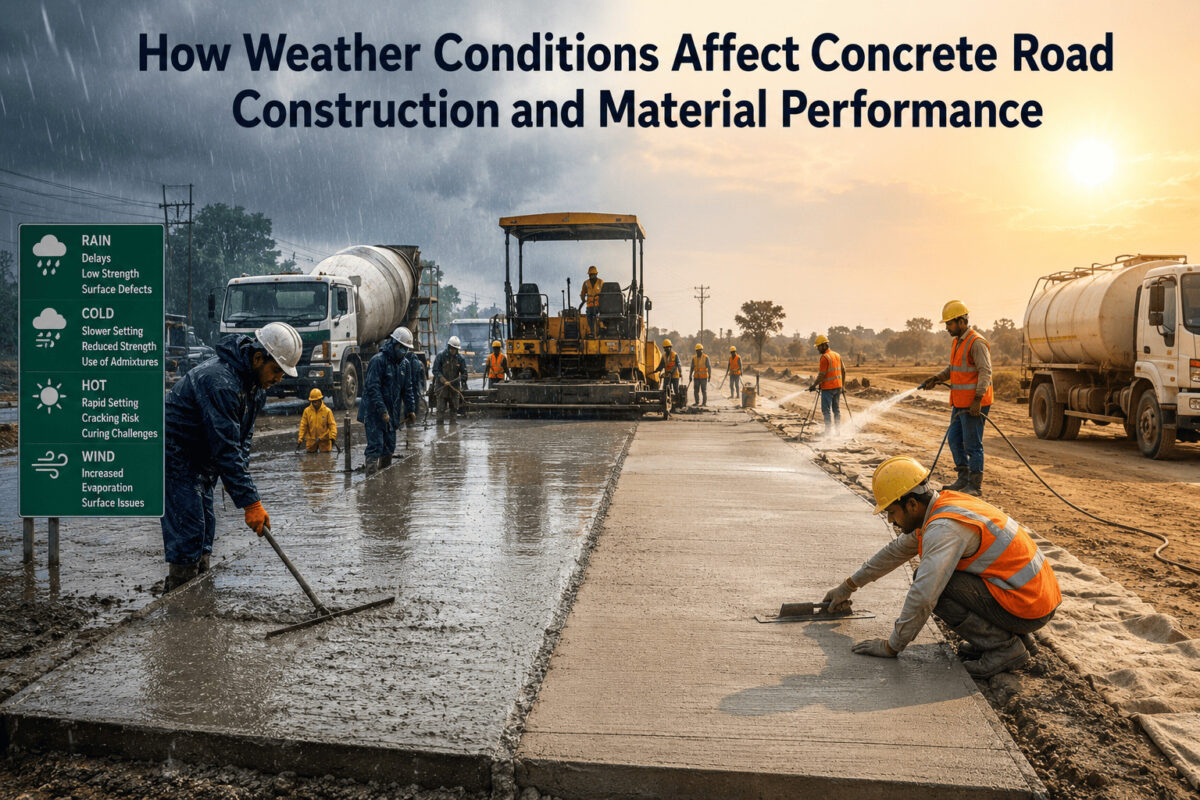
Concrete does not care about your paving schedule. It cures at a rate set by chemistry, and that rate is heavily influenced by temperature, humidity, and moisture, none of which a contractor fully controls once the pour is underway. Weather is one of the few variables on a road construction site that cannot be specified away. It has to be planned around.
India’s climate makes this a genuinely significant issue rather than an occasional inconvenience. can run through peak summer heat, a full monsoon season, and, in some regions, cold winter mornings, all within one construction program. Each of those conditions changes how the concrete, the joints, and the accessories being installed alongside them behave.
This guide covers how hot weather, cold weather, and rain each affect fresh concrete and the accessories installed alongside it and what precautions actually make a difference on site rather than just adding paperwork to the daily routine.
How does weather affect concrete road construction?
Weather affects concrete through its curing chemistry. Heat accelerates moisture loss and causes plastic shrinkage cracking; cold slows strength gain and risks freeze damage, and rain disrupts the water-cement ratio and delays joint sealing. Each condition requires different precautions during placing and curing.
Why Weather Is a Critical Factor in Concrete Road Construction
Fresh concrete is a chemical reaction in progress. Heat accelerates that reaction, cold slows it down, and moisture, whether too much or too little, disrupts it. A slab poured without accounting for the day’s weather can look fine on the surface and still develop cracking, weak strength gain, or poor finish within its first weeks, long after the crew that placed it has moved on to the next section.
Weather does not just affect the concrete itself either. Joint sealing, groove cutting timing, and membrane laying are all sensitive to temperature and moisture in their own ways, which means a weather-aware approach needs to cover the whole construction sequence, not just the pour.
A useful habit on any active paving site is treating the daily weather forecast as part of the standard morning briefing alongside the paving program itself, rather than something checked informally by whoever happens to look at their phone. Knowing what the day’s temperature, humidity, and rain probability look like before committing to a pour gives the site team a real chance to adjust timing or precautions rather than reacting after conditions have already changed mid-pour.
Documenting weather conditions at the time of each pour- temperature, humidity, and any precipitation- also creates a useful record if a quality issue emerges later and the cause needs to be traced back to conditions on the day the concrete was placed rather than assumed to be a material or workmanship fault alone.
Effects of Hot Weather on Concrete Roads
Hot weather also affects the people doing the work, not just the material, and crew fatigue in extreme heat can itself become a quality risk if finishing operations are rushed to get the crew out of the sun sooner. Scheduling adequate rest breaks and rotating crew through shaded areas during a hot weather pour is as much a quality measure as a welfare one.
India’s summer temperatures, often well above 40 degrees Celsius across large parts of the country, push fresh concrete into conditions that genuinely change how it behaves.
Rapid Moisture Loss and Plastic Shrinkage Cracking
High temperatures, low humidity, and wind all accelerate surface moisture evaporation from fresh concrete. When the surface loses water faster than bleed water can replace it, the surface shrinks while the concrete below is still plastic, causing fine cracks to appear within the first few hours after placing. These plastic shrinkage cracks are typically shallow but can still affect surface durability and appearance over the life of the pavement.
Faster Setting Time and Workability Loss
Heat speeds up the hydration reaction, which means the concrete stiffens faster and the window for placing, finishing, and texturing shrinks. A crew working on a normal schedule in cool weather can find themselves racing against the set time on a hot afternoon, especially on a large pour where the far end of the placement is being finished later than the near end, and the concrete placed first is already noticeably stiffer by the time the crew reaches the last section.
Precautions: Curing Compounds, Shading, Timing of Pour
Applying curing compound promptly once the surface can take it slows moisture loss significantly, and on very hot days the window for doing this correctly is narrower than usual. Shading fresh concrete where practical, and scheduling pours for early morning or evening on very hot days, reduces the peak temperature the concrete experiences during its most vulnerable early hours.
Keeping mixing water cool and covering aggregate stockpiles from direct sun also helps control concrete temperature at the point of placing, since aggregate that has been baking in the sun all day adds heat to the mix regardless of how carefully the batching itself is controlled.
Effects of Cold Weather on Concrete Roads
Cold weather sections of a project also tend to have shorter daylight hours to work with, which can compress the available window for placing and finishing a pour before temperatures drop further in the evening. Planning the day’s pour size around the realistic daylight and working temperature window, rather than the volume that would be achievable in warmer months, avoids rushing the tail end of a placement as conditions worsen.
Cold weather is a more regional concern in India than heat, but it is a real one in the northern states and at higher elevations during winter months.
Delayed Setting and Strength Gain
Cold temperatures slow the hydration reaction, which delays both setting time and early strength gain. A slab that would reach adequate strength in a few days during warm weather may take considerably longer in cold conditions, which affects when joints can be safely cut and when the pavement can be opened to traffic, both of which need to be reassessed against actual strength testing rather than a standard warm weather timeline.
Risk of Freeze-Thaw Damage
In regions where temperatures drop toward freezing, fresh concrete that has not yet gained sufficient strength is vulnerable to damage from ice formation within the pore structure. This is a more significant concern in northern Indian states during winter than in most of the country, but it is a real risk where it applies, and it can cause internal damage that is not always visible on the surface immediately after it occurs.
Precautions for Cold-Weather Concreting
Using warmed mixing water and, where necessary, heated aggregate helps maintain a workable concrete temperature going into the pour. Extending curing duration compensates for the slower strength gain, since applying a standard curing period regardless of actual strength development risks opening the pavement before it is ready.
Where freezing risk is genuine, protecting the fresh slab with insulating covers until it has gained adequate strength prevents freeze damage, and this protection is often needed for longer than the equivalent warm-weather curing period would require.
Effects of Rain and Humidity on Concrete Roads
High humidity without actual rainfall also deserves attention, since it slows surface drying and extends the time needed before texturing, curing compound application, or joint sealing can proceed safely. Relying on visible rainfall alone as the trigger for weather-related precautions misses this slower, less obvious humidity effect on a still overcast, muggy day.
Monsoon season is arguably the single biggest weather challenge for Indian road construction, since it affects nearly every stage of the process at once.
Water-Cement Ratio Disruption
Rain falling on fresh concrete before it has set adds uncontrolled water to the mix, disrupting the water-cement ratio the mix design was based on. This weakens the surface layer and can wash out cement paste, leaving exposed aggregate and a poor finish that often needs to be reworked or accepted as a visible defect.
Surface Finish Problems
Even light rain during finishing operations can mar the surface texture before it sets, and heavier rain can wash away the fresh texturing pattern entirely, requiring the affected section to be reworked or accepted as a defect that affects skid resistance for the life of that section.
Joint Sealing Delays
Joint sealant and primer application both require a dry, clean joint face to bond properly. Rain during or shortly before sealing work forces a delay until the joint dries out completely, which can push back the whole sealing schedule if rain is frequent, and joints left unsealed for longer during monsoon season are more exposed to water and debris ingress in the meantime.
Weather-Related Precautions for Joint and Accessory Installation
Separation membrane should not be laid on a heavy rain base surface, since a wet or muddy base surface compromises how well the sheet lies flat and increases the risk of puncture from debris trapped in standing water. A membrane laid over a wet, uneven base rarely performs as well as one laid on a properly cleaned and dry surface, even if the sheet itself is not damaged during placement.
Sealant and primer work should be scheduled around forecast dry windows wherever possible, since both require dry surfaces to bond correctly, and rushing this work ahead of an approaching storm often produces a joint that fails prematurely. Groove cutting can generally proceed in light rain, but the crew should account for the fact that wet cutting already uses water, and heavier rain can wash away visibility of the cut line, making it harder to keep the saw tracking accurately.
Storage of weather-sensitive accessories on-site also deserves attention during periods of unpredictable weather. Keeping membrane rolls, sealant drums, and backer cord under cover and off the ground protects them from both sudden rain and prolonged sun exposure while they wait to be used, since accessories that sit exposed on an active site for even a few days can pick up damage that only becomes apparent during installation.
Planning Concrete Pours Around Seasonal Weather
Checking the forecast before scheduling a pour is basic practice, but planning further ahead by season matters too. Summer pours benefit from early morning starts and extra attention to curing, since the peak heat of the day is genuinely the worst time to place and finish fresh concrete if it can be avoided.
Monsoon season pours need contingency time built into the schedule for rain delays, and covered storage for moisture-sensitive accessories becomes more important since materials like cement and sealant are far more exposed to spoilage risk during the wettest months of the year. Winter pours in cooler regions need realistic strength gain timelines rather than assuming a standard curing period will apply regardless of temperature, since opening a pavement based on a calendar date rather than actual tested strength is a common and avoidable mistake in cold-weather concreting.
It is also worth building a simple weather contingency plan into the project schedule at the outset, rather than treating each weather delay as an unplanned surprise. Identifying which pours are flexible enough to shift by a day or two if rain is forecast and which sections are on the critical path and need alternative protection measures instead turns weather management from a reactive scramble into a planned part of the program.
Frequently Asked Questions
Q1. Why does hot weather cause cracking in concrete roads?
Hot weather accelerates moisture loss from the concrete surface faster than bleed water can replace it, causing the surface to shrink while the concrete below is still soft. This creates fine plastic shrinkage cracks within the first few hours after placing.
Q2. Can concrete be poured during the monsoon season?
Concrete can be poured during light rain with proper precautions, but heavy rain should be avoided since it disrupts the water-cement ratio and damages the surface finish. Scheduling around forecast dry windows is the safest approach during monsoon season.
Q3. How does cold weather affect concrete strength?
Cold weather slows the hydration reaction, delaying both setting time and early strength gain compared to warm weather conditions. This affects when joints can be safely cut and when the pavement can be opened to traffic.
Q4. What precautions should be taken when pouring concrete in summer?
In summer, apply curing compound promptly, schedule pours for cooler parts of the day, and keep mixing water and aggregate stockpiles shaded where practical. These steps reduce the peak temperature the concrete experiences during its early curing period.
Q5. Does weather affect joint sealing and groove cutting timing?
Yes, joint sealing and priming both require a dry joint face to bond correctly, so rain forces a delay until the joint dries out. Groove cutting can often continue in light rain, but heavier rain affects visibility of the cut line.
Related Blogs

Sustainable Road Construction: Materials and Practices for Modern Infrastructure

PQC Road Construction Step by Step: Materials, Equipment, and Accessories Required

How to Cut Contraction Joints in PQC Roads: Timing, Depth, and Blade Selection Guide