
Road construction equipment does not fail on a convenient day. It fails mid-pour when a screed machine seizes halfway down a highway lane or when a groove-cutting blade snaps just as the sawing window is closing. Most of those failures trace back to the same root cause: maintenance that got skipped because the site was busy and the machine was still running fine until it was not.
On a fast-moving paving program, equipment reliability is not a side issue; it is the schedule. A single breakdown on a needle vibrator or a power trowel can turn a planned full-day pour into a partial one, and a machine that goes down during joint cutting can cost an entire sawing window that does not come back once shrinkage stress has already found somewhere else to crack the slab.
Preventive maintenance is not glamorous work, but it is the difference between a site that hits its paving schedule and one that loses days to breakdowns. This guide covers what a proper maintenance routine looks like for the key machines on a road construction site, how to tell daily checks from periodic servicing, and how to build a schedule that actually gets followed rather than one that exists only as a document in a site office drawer.
How often should road construction equipment be serviced?
Road construction equipment needs daily pre-use checks for fluid levels and visible damage, plus periodic servicing on a weekly or monthly cycle based on actual usage hours. Daily checks catch sudden failures, while periodic servicing catches gradual wear before it causes a breakdown.
Why Preventive Maintenance Matters on Road Sites
Concrete does not wait for a machine to be fixed. A breakdown mid-pour can mean a partially placed slab, a missed sawing window, or a section of pavement finished by hand because the trowel machine is down. Beyond the direct cost of downtime, unplanned repairs are almost always more expensive than scheduled servicing, since a small worn part left unchecked often takes a bigger, more expensive part down with it when it finally fails.
A well-maintained fleet also protects the quality of the finished road. A groove cutting machine with a worn blade cuts an uneven joint that does not track the intended line cleanly. A poorly maintained vibrator leaves voids in the concrete that show up later as surface defects or weak spots. The equipment is not separate from the quality of the pavement; it is part of it, and treating maintenance as a cost centre rather than a quality control activity misses that connection entirely.
There is also a safety dimension that is easy to overlook until something goes wrong. Hydraulic failures, worn drive components, and electrical faults on site equipment are not just productivity issues; they are the kind of failures that cause injuries when they happen without warning. A maintenance routine that catches wear before it becomes failure protects the crew as much as it protects the schedule.
Maintenance Checklist for Key Road Construction Equipment
Screed Machines and Power Trowels
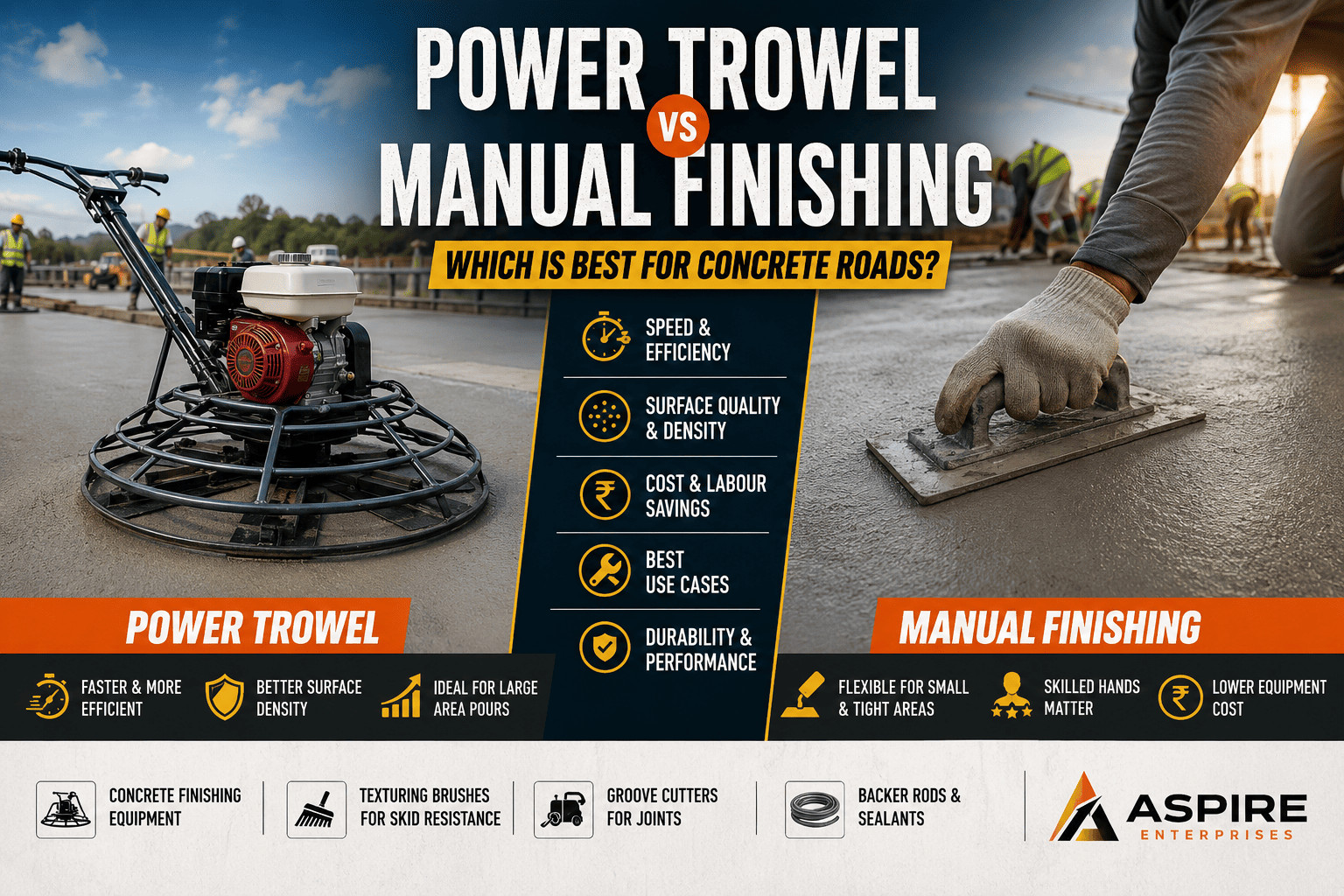
Check the engine oil level and condition before every shift, and inspect drive belts for wear or cracking, since a belt that fails mid-pour stops the machine at the worst possible moment. On power trowels, blade pitch mechanisms should move freely without binding, and the blades themselves need regular inspection for wear or bending, since a damaged blade produces an uneven surface finish that a site inspection will eventually catch, usually after the concrete has already set.
Grease points on the screed frame should be lubricated on a set schedule rather than only when something starts squeaking, since audible wear is usually a sign that damage has already begun. Keep an eye on fuel and hydraulic lines for any sign of chafing where they run near moving parts, since a slow leak that starts as a minor seep can become a shutdown within a single shift.
Needle Vibrators
The flexible shaft on a needle vibrator is the part most likely to fail from neglect. Check it for kinks or damage before use, and keep it clean of dried concrete, since hardened residue accelerates wear on the shaft casing every time the machine runs. The vibrating head itself should be inspected for cracks or wear at the tip, and the motor connection checked for a secure fit, since a loose connection reduces vibration output without giving any obvious warning sign until the concrete comes out undercompacted.
Vibrators are usually the piece of equipment used most continuously through a pour, and that constant use means wear accumulates faster than on machines that only run intermittently. A rotation system, where two or three vibrators are used in sequence rather than running one machine continuously through a long pour, extends the working life of each unit and gives you a backup if one fails partway through.
Groove Cutting Machines
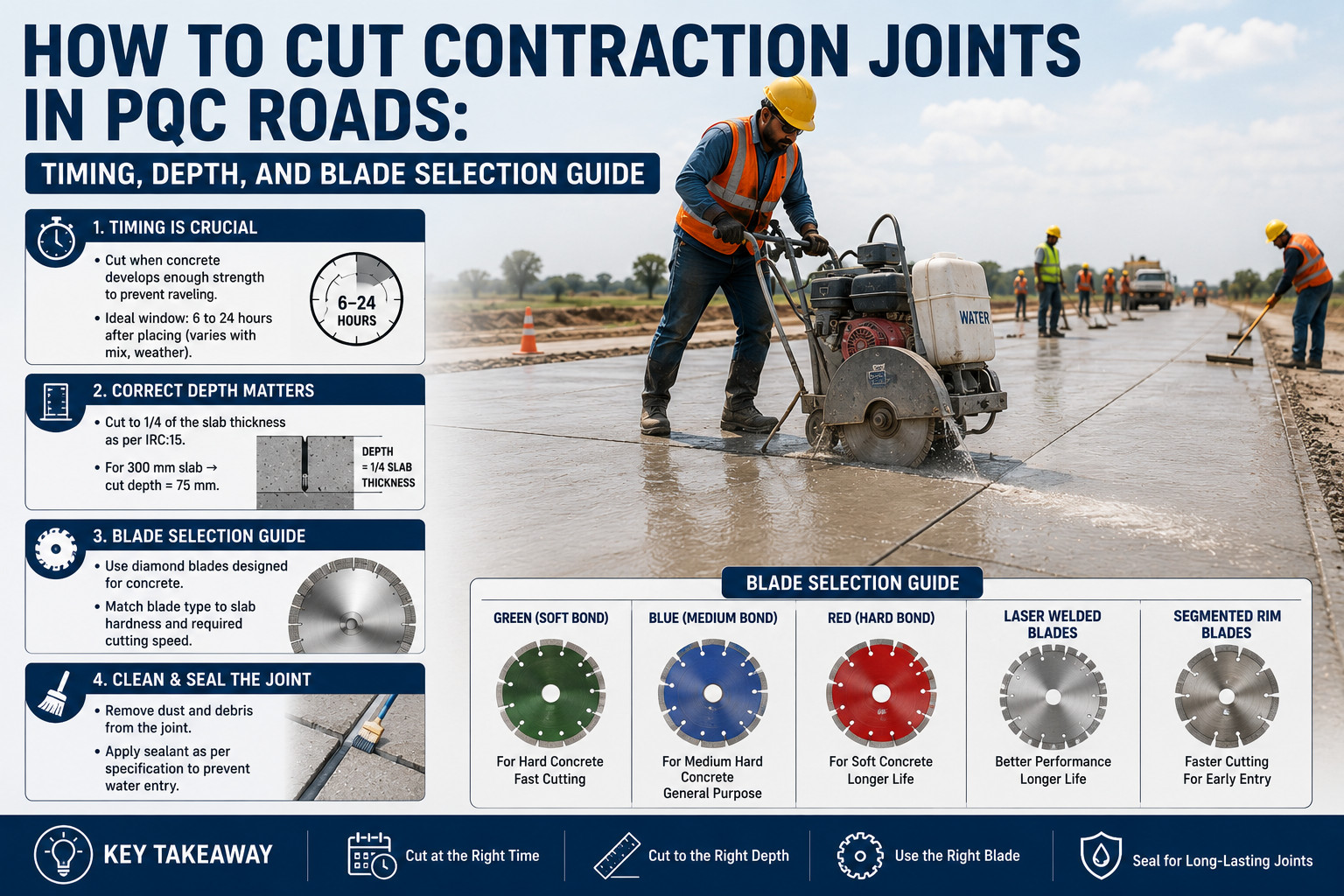
Blade condition is the most important daily check on a groove cutting machine, since a dull or damaged blade slows the cut, wears out faster, and gives a ragged joint edge that undermines the whole point of controlled joint cutting. The water supply system on wet cutting machines needs to run clear, since blocked lines cause overheating and premature blade wear, and an overheated blade can also produce a rougher cut even before it visibly fails.
Depth adjustment mechanisms should be checked for accuracy before every joint cutting session, since a saw that has drifted out of calibration will cut joints too shallow without the operator necessarily noticing until the crack fails to follow the cut and shows up somewhere else on the slab instead. Given how time-critical the sawing window is, a groove-cutting machine going down mid-session is one of the costliest breakdowns on a road site, which is exactly why it deserves the most attention in a preventative routine.
Compactors and Rollers
Vibration mechanisms on compaction equipment need regular inspection, since a compactor running with a failing vibration unit will pass concrete or sub-base material off as compacted when it is not, and that failure only becomes visible much later as settlement or pumping under traffic. Tire or drum condition affects both compaction quality and operator safety, and hydraulic systems should be checked for leaks before every shift, since a slow leak that goes unnoticed can leave a machine without pressure exactly when it is needed most.
Compactors also take a beating from the material they work on, so undercarriage and drum surfaces should be cleaned regularly to prevent buildup that affects both compaction transfer and the machine’s own wear pattern over time.
Daily vs Periodic Maintenance Tasks
Daily checks are quick and should happen before the machine starts work every single day, fluid levels, visible damage, loose fittings, and anything that would stop the machine mid-task if ignored. These checks typically take a few minutes per machine and catch the kind of sudden failure that halts work without warning.
Periodic maintenance runs on a longer cycle, weekly or monthly depending on usage, and covers deeper checks such as full lubrication, belt tension, filter changes, and calibration. This is where wear that accumulates gradually gets caught before it becomes a failure, and it usually requires the machine to be taken out of active use for a short period, which is exactly why it needs to be scheduled rather than left to happen whenever there is a quiet moment on site, since quiet moments on a paving program are rare.
Treating daily checks as optional because the periodic service is up to date is one of the most common ways equipment fails unexpectedly, since the two schedules cover different failure modes and neither substitutes for the other. A machine can pass a thorough monthly service and still develop a fault the very next week that a thirty-second daily check would have caught.
Common Equipment Failures and Their Root Causes
A large share of equipment failures on road sites trace back to a handful of repeatable causes. Concrete residue left to harden on vibrators and finishing tools accelerates wear on moving parts, since dried concrete acts almost like an abrasive against components designed to move smoothly. Skipped lubrication on grease points leads to premature bearing failure, often on components that are expensive and slow to replace compared to the cost of the grease itself.
Blades that run past their useful life because nobody tracked how many cutting hours they had done are a recurring problem on groove cutting machines specifically, since blade wear is gradual and easy to underestimate until the cut quality visibly degrades. Hydraulic leaks left unaddressed because the machine still ran fine eventually starve a system of pressure at the worst moment, usually mid-task rather than during a convenient inspection window.
Almost none of these failures happen without warning. They happen because the warning signs were not checked for, which is really the core argument for preventive maintenance over reactive repair. The signs are almost always there in advance; the question is whether anyone is looking for them on a consistent schedule.
Signs Your Equipment Needs Immediate Servicing
A few signs should stop work and trigger an inspection rather than being pushed through until the shift ends: unusual vibration or noise that was not there before, visible fluid leaks under the machine, a noticeable drop in performance, such as a vibrator that no longer compacts concrete as effectively, or any part that has started moving or flexing in a way it should not.
Continuing to operate a machine showing these signs usually turns a minor repair into a major one and, in some cases, turns a repairable fault into a safety incident. The instinct on a busy site is often to keep a machine running until the current task is finished, but for equipment showing a genuine warning sign, that instinct is exactly backwards, since the cost of stopping briefly for an inspection is almost always smaller than the cost of a failure partway through a pour or a cut.
Building a Preventive Maintenance Schedule for Your Site
A maintenance schedule only works if someone owns it. Assign responsibility for daily checks to the operator of each machine, and keep a simple log of what was checked and what was found, since a log turns maintenance from a vague good intention into a traceable record that shows whether the routine is actually being followed.
Set periodic service intervals based on the manufacturer’s recommendations and actual site usage hours, not a generic calendar date, since a machine running double shifts wears out faster than one used occasionally, and a fixed calendar schedule does not account for that difference. Keep a stock of common wear parts, such as groove-cutting blades and vibrator shafts, on-site so a scheduled replacement does not turn into a delay waiting for a delivery from a supplier.
A schedule that exists only on paper does not prevent breakdowns. One that is actually followed does. The difference between the two usually comes down to whether someone on site has clear ownership of the routine and whether the site culture treats a five-minute daily check as a normal part of starting work rather than an optional extra that gets skipped when things are busy.
Frequently Asked Questions
Q1. Why is preventive maintenance important for road construction equipment?
Preventive maintenance keeps equipment running through a tight paving schedule and avoids the cost of unplanned repairs, which are almost always more expensive than scheduled servicing. It also protects the quality of the finished pavement, since worn equipment produces poor results.
Q2. What equipment needs daily pre-use checks on a road site?
Fluid levels, visible damage, loose fittings, and moving parts that bind or feel wrong should all be checked before a machine starts work each day. These checks are quick but catch problems before they become breakdowns.
Q3. How often should groove cutting machine blades be inspected?
Groove cutting blades should be inspected daily for wear or damage and tracked by cutting hours rather than just calendar time, since blade life depends on usage and the aggregate being cut. A dull blade should be replaced before it starts producing ragged joints.
Q4. What are common signs that construction equipment needs servicing?
Unusual vibration or noise, visible fluid leaks, a drop in performance such as reduced compaction from a vibrator, and any part that moves or flexes abnormally are all signs that a machine needs inspection. Continuing to run equipment showing these signs usually leads to a bigger repair later.
Q5. How should road construction equipment be maintained during the off-season?
During the off-season, clean all equipment thoroughly, drain or stabilize fuel systems as recommended by the manufacturer, and store machines under cover away from moisture. A pre-season inspection before the next construction period starts catches any issues that developed during storage.