Top Backer Rod Manufacturer and Supplier in India
Aspire Enterprises is a leading backer rod and foam rod manufacturer and supplier in India, producing the closed-cell foam backer cord and the XLPE foam debonding strip used to back joint sealants on PQC roads, bridges, industrial floors, and structural joints. Specify the diameter, the joint width, and the sealant type, and the team will confirm the right product for the job. A backer rod is small, cheap, and decisive: pressed in at the right diameter and depth, it gives the joint sealant the geometry it needs to last for years instead of months.
Buyers searching for backer rod, foam rod, backer cord, joint backer rod, or backer cord debonding strip for concrete road will find every standard size on stock with consistent foam density and dimensional accuracy. We supply individual project quantities and bulk volumes for highway joint sealing programmes against the same quality standards.
What is a Backer Rod (Foam Rod)?
A backer rod, also called a foam rod or backer cord, is a flexible closed-cell foam rope pressed into a cleaned saw cut joint before the sealant is applied. The rod controls the sealant depth, prevents the sealant from bonding to the bottom of the expansion joint board, and gives the sealant the geometry it needs to flex correctly during slab movement. Three-sided adhesion of a sealant, where the sealant bonds to all three faces of the joint, severely shortens the joint life. A correctly installed backer rod ensures the sealant bonds only to the two opposing joint faces, allowing it to stretch and compress freely.
In short, the backer rod is what lets the joint sealant do its job for years instead of months. It is installed with the backer cord roller and finished with polysulphide sealant and primer. The whole sealing sequence depends on this small foam rod sitting at the right depth in the joint.
Backer Rod Sizes: 6, 8, 10, 12, 20, 25, 30 and 32 mm
Aspire Enterprises supplies backer rod and foam rod in every common diameter used in Indian joint sealing work. Backer rod diameter is selected so the rod is slightly larger than the joint width, typically by one or two millimeters. A peg rod that matches or sits below the joint width slides down too easily and does not give the sealant a stable backing. A rod that is slightly larger compresses on installation, fills the joint snugly, and recovers to hold its place.
Backer Rod Size | Common Use |
6 mm backer cord | Fine crack repair joints |
8 mm backer cord | Narrow PQC contraction joints |
10 mm backer cord | Standard PQC contraction joints |
12 mm | Wider joints, expansion joints |
20, 25, 30, 32 mm | Expansion joints, structural joints |
The 6, 8 and 10 mm sizes are the most frequently used on PQC road joints. Larger diameters are used on expansion joints, bridge joints, and structural construction joints. Send the joint width and sealant type and the team will confirm the right backer rod size from stock.
EPE and LDPE Backer Cord Material
Our backer rod is produced from EPE and LDPE foam in pure white finish. The closed cell structure gives the rod the right combination of compression for installation and recovery to fill the joint width. The rod is chemically compatible with polysulfide, polyurethane, silicone, and bitumen-based joint sealants. Open cell foam is used where the joint design requires it, although closed cell is the default for highway and PQC joint sealing.
Backer rod storage matters. Store the coils flat in a dry place, away from direct sun, and protect them from compression by stacking. Compressed rods lose their recovery and will not fill the joint correctly when installed. Open a coil just before use and pull lengths off as needed rather than uncoiling the whole roll on site.
XLPE Foam Debonding Strip
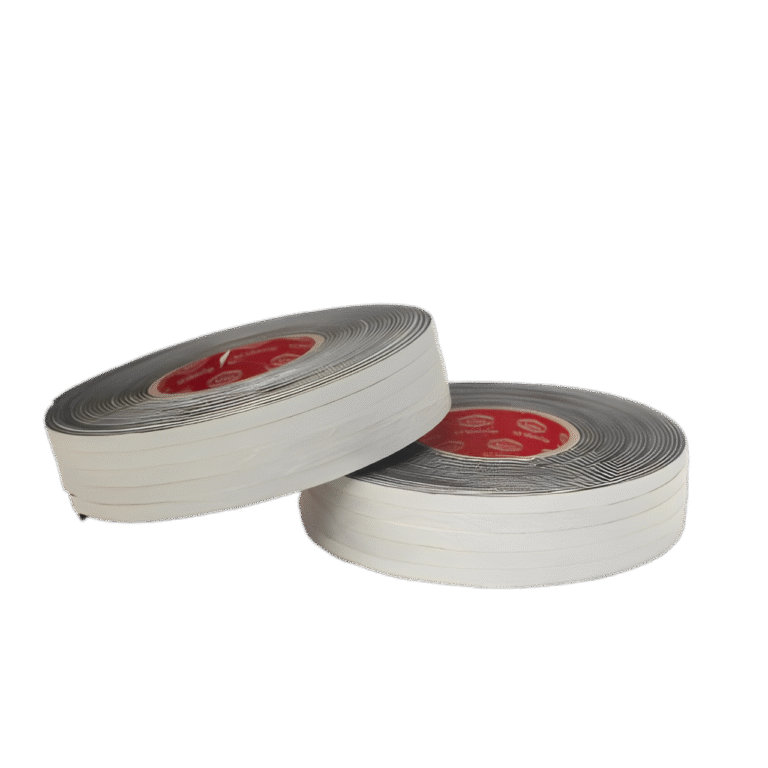
The XLPE foam debonding strip is the paper backed filler used in the joint beneath the sealant when a strip profile is preferred over a round rod. It is supplied in black XLPE foam in standard running sizes of 2 x 8, 5 x 8, 2 x 10, 5 x 10, 6 x 6, 8 x 8 and 10 x 10 mm. The strip prevents sealant adhesion to the joint base and increases the bonding area of the sealant to the joint side walls, which is useful in some joint designs where a flat profile suits the sealant chemistry better than a round backer.
Backer Rod Installation
The backer rod is installed by pressing it into the cleaned joint with a backer cord roller until the correct depth below the joint surface is achieved. The rod diameter should be slightly larger than the joint width to give a snug fit. Once the rod is at depth, the joint faces are primed and the sealant is applied. The result is a sealant with the correct depth to width ratio and the freedom to stretch and compress as the slab moves.
The right depth gives the sealant the correct depth to width ratio for long service life. Check the rod depth every few meters during installation, and adjust pressure on the roller to keep it consistent.
Backer Rod Specifications
Specification | Detail |
Backer cord material | EPE and LDPE foam, closed cell |
Backer cord rib sizes | 6, 8, 10, 12, 20, 25, 30, 32 mm |
Backer cord colour | Pure white |
Debonding strip material | XLPE foam |
Debonding strip sizes | 2 x 8, 5 x 8, 2 x 10, 5 x 10, 6 x 6, 8 x 8, 10 x 10 mm |
Debonding strip colour | Black |
Sealant compatibility | Polysulphide, polyurethane, silicone, bitumen based |
Buy Backer Rod Online from the Manufacturer
Order backer rod and foam rod direct from Aspire Enterprises. Share the diameter or strip size, the total running length, and the project location, and the team will confirm stock and dispatch the same business day. We supply in retail volumes for single jobs and in bulk for highway joint sealing programmes.
Why Aspire Enterprises for Backer Rod and Foam Rod
- Every standard size in stock: 6 mm to 32 mm backer cord and 2 x 8 to 10 x 10 debonding strips.
- Consistent foam density: Batch-level checks ensure reliable joint performance.
- Multi-sealant compatibility: Works with polysulphide, polyurethane, silicone, and bitumen sealants.
- Bulk and custom supply: Standard coils and project-specific cut lengths to order.
- Pan India dispatch: Fast delivery to PQC, bridge, and industrial joint sealing sites.
Backer Rod & Debonding Strip – Backer Cord Supplier in India
As an established backer cord supplier in India, Aspire Enterprises provides closed-cell polyethylene backer rods in multiple diameters to suit different joint widths in PQC road construction. Our backer cord for concrete roads is used alongside joint sealants to prevent three-point adhesion and ensure long-lasting, flexible sealing. We are a trusted backer cord supplier for highway, airport, and industrial flooring projects across India. Buy backer cord and debonding strip online directly from us with competitive pricing and fast delivery.
Conclusion
A backer rod is small, cheap, and decisive. Pressed in at the right diameter and depth, it gives the joint sealant the geometry it needs to last for years instead of months. Aspire Enterprises supplies backer rod and foam rod in every standard size from 6 mm to 32 mm, plus XLPE foam debonding strip, all compatible with the common sealant chemistries used in PQC and structural joint sealing across India.




 marketingteam.aspire@gmail.com